
ASTM F2413-24 vs CSA Z195: What's the Difference?
Choosing the right safety boots means understanding the standards behind their protective features. In North America, two important standards are ASTM F2413-24 in the United States and CSA Z195 in Canada.
Both address workplace foot protection, but they use different requirements and identification systems.
The key difference: ASTM F2413-24 identifies protective performance through standardized markings, while CSA Z195 also uses recognizable symbols, such as the green triangle for Grade 1 toe protection combined with sole puncture protection.
Meeting one standard does not automatically establish compliance with the other.
ASTM F2413-24 vs CSA Z195: Quick Comparison
| Feature | ASTM F2413-24 | CSA Z195:14 (R2025) |
|---|---|---|
| Primary market | United States | Canada |
| Standards organization | ASTM International | CSA Group |
| Toe protection | Impact and compression requirements | Grade 1 and Grade 2 toe protection |
| Puncture resistance | PR designation | Protective sole markings |
| Electrical shock protection | EH designation | ESR marking (Omega symbol) |
| Identification | ASTM standard designation and performance markings | CSA certification and protective symbols |
| Cross-border acceptance | Check applicable Canadian requirements | Check applicable U.S. requirements |
Both standards address several similar workplace hazards, but their test requirements, classification systems, and markings are not identical.
What Is ASTM F2413-24?
ASTM F2413-24 is a safety footwear performance standard developed by ASTM International. It establishes minimum requirements for protective safety-toe footwear intended for occupational use.
The standard covers several categories of protection, including:
-
Impact Resistance (I): Protects the toe area against specified impacts.
-
Compression Resistance (C): Protects against specified compressive forces.
-
Electrical Hazard (EH): Provides secondary protection against certain electrical shock hazards under specified conditions.
-
Puncture Resistance (PR): Addresses penetration hazards through the bottom of the footwear.
-
Metatarsal Protection (Mt): Provides additional protection over the upper foot when included.
Not every pair of ASTM F2413-24 footwear includes every optional protective feature.
How to Read ASTM F2413-24 Markings
ASTM-rated footwear includes markings identifying the applicable standard and protective performance categories.
For example, footwear marked with ASTM F2413-24, impact and compression ratings, EH, and PR indicates that those specific protective performance requirements are represented.
Always read the complete marking on the footwear or its documentation rather than relying solely on an online product title.
For the official standard, visit ASTM International's F2413-24 page.
What Is CSA Z195?
CSA Z195 is Canada's protective footwear standard. The 2014 edition, reaffirmed in 2025, is designated CSA Z195:14 (R2025).
The standard addresses occupational hazards through requirements covering protective toe caps, sole puncture resistance, electrical shock resistance, metatarsal protection, and additional performance characteristics.
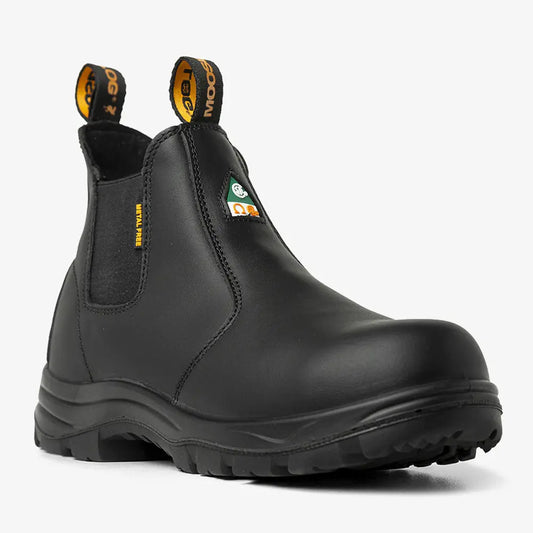
One of the most recognizable features of CSA-rated safety footwear is its protective marking system.
What Does the CSA Green Triangle Mean?
The CSA green triangle identifies footwear with:
-
Grade 1 protective toe protection
-
A puncture-resistant protective sole
It is commonly found on safety boots used in construction and other industrial workplaces where falling objects and sharp debris may present hazards.
What Does the CSA White Rectangle Mean?
A white rectangle featuring an orange Omega symbol identifies electric-shock-resistant footwear.
This marking indicates a specific type of electrical shock protection. However, the protection can deteriorate through wear and exposure to wet conditions.
Electrical shock-resistant footwear is not a replacement for established electrical safety procedures.
Are ASTM EH and CSA ESR the Same?
ASTM Electrical Hazard (EH) and CSA Electric Shock Resistant (ESR) designations address related hazards, but they belong to different standards.
Do not assume that footwear with an ASTM EH marking automatically qualifies for a CSA ESR designation, or vice versa.
To learn more about Canadian footwear markings, visit the Canadian Centre for Occupational Health and Safety.
Can ASTM Safety Boots Be Worn in Canada?
Not automatically.
Canadian workplace requirements depend on applicable provincial, territorial, or federal regulations and the hazards involved.
For example, federally regulated workplaces in Canada are subject to protective footwear requirements referencing CSA Z195 under the Canada Occupational Health and Safety Regulations.
Workers should verify their employer's requirements rather than assuming an ASTM marking alone is sufficient.
Can CSA Safety Boots Be Worn in the United States?
CSA-rated footwear does not automatically establish compliance with every U.S. workplace requirement.
In the United States, OSHA's general industry foot protection regulation, 29 CFR 1910.136, identifies specific consensus standards and also permits footwear that the employer demonstrates is at least as effective as footwear constructed to those standards.
Although ASTM F2413-24 is the current ASTM edition, OSHA's regulatory text still references earlier editions. Workers and employers should confirm the applicable requirements.
See OSHA's Foot Protection Standard for details.
Why Choose Safety Boots That Meet Both ASTM and CSA Standards?
For workers who operate across the United States and Canada, footwear carrying verified markings for both standards may simplify the selection process.
Potential advantages include:
-
Protection evaluated under both standards
-
Clear identification of applicable protective features
-
More flexibility when selecting footwear for workplaces with different standards requirements
However, dual-standard footwear is not universally approved for every workplace. Employers may require additional protection based on specific hazards.
MooseLog CSA and ASTM Safety Boots
Select MooseLog safety boots are designed to meet both CSA Z195-14 and ASTM F2413-24 requirements.
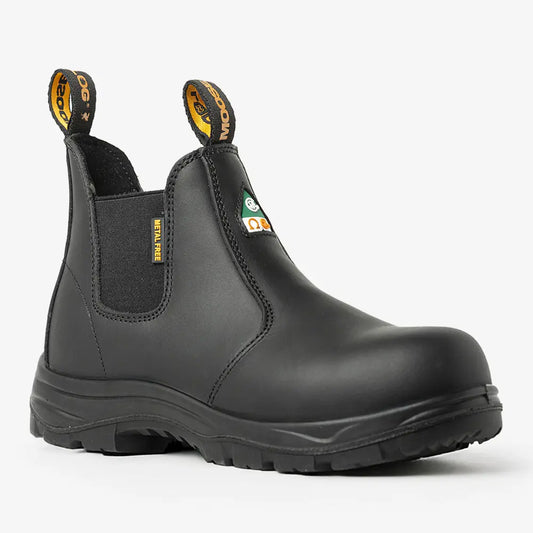
For example, the MooseLog Timber II Chelsea Work Boots feature fiberglass composite toe protection, a non-metallic puncture-resistant plate, and specified electrical hazard and electric-shock-resistant protection.
Explore MooseLog Timber II CSA & ASTM Work Boots
Always check the specific model's protective markings and your employer's requirements before purchasing.
Frequently Asked Questions
What is the difference between ASTM and CSA safety boots?
ASTM F2413 and CSA Z195 are separate standards used primarily in the United States and Canada, respectively. Both address workplace foot hazards, but their performance requirements and marking systems differ.
What does ASTM F2413-24 mean?
ASTM F2413-24 is the 2024 edition of ASTM's performance standard for protective safety-toe footwear. It covers impact and compression protection along with additional specified protective categories.
Is CSA Z195 the same as ASTM F2413?
No. Although the standards address similar hazards, they have distinct requirements and markings. Compliance with one does not automatically establish compliance with the other.
What does CSA Z195 mean on work boots?
CSA Z195 refers to Canada's protective footwear standard. Specific symbols on the footwear indicate the protective features provided.
Are ASTM F2413-24 safety boots OSHA compliant?
Footwear meeting ASTM F2413-24 may satisfy applicable workplace requirements, but compliance must be evaluated against the relevant OSHA regulation and employer hazard assessment. The general industry regulation also provides for footwear demonstrated to be at least as effective as footwear built to the referenced standards.
Do I need both CSA and ASTM certification?
Not necessarily. The appropriate standard depends on your workplace, its location, and the protective equipment requirements established for the job.
Final Thoughts
ASTM F2413-24 and CSA Z195 both play important roles in North American workplace foot protection.
The most important step is not simply choosing one standard over another. It is understanding what each marking means and confirming that the footwear provides the protection required for your work.
For additional guidance on selecting protective footwear, read our Safety Footwear Buyer's Guide.