

Safety Shoes Buying Guide: How to Choose the Right Work Footwear
Choosing the right safety shoes starts with understanding the hazards you face at work. A good pair should provide the protection your job requires while remaining comfortable through long shifts.
When buying safety shoes, check five things first: the safety certification, toe protection, outsole grip, puncture resistance, and fit. The right combination depends on your workplace, not simply the appearance or price of the footwear.
This safety shoes guide explains how to compare protective features, choose between different work boot styles, and understand ASTM and CSA safety markings.
1. Understand Safety Shoe Ratings and Certifications
Before comparing styles or materials, check whether the footwear meets your workplace's safety requirements.
ASTM Safety Footwear Standards (United States)
In the United States, ASTM F2413 is a widely used standard for protective safety-toe footwear. Different markings identify specific types of protection.
Common ratings include:
| Marking | Protection |
|---|---|
| I | Impact resistance |
| C | Compression resistance |
| EH | Electrical hazard protection |
| PR | Puncture resistance |
| Mt | Metatarsal protection |
Not every ASTM-rated safety shoe provides every type of protection. Check the actual markings on the footwear.
For workplace requirements, consult OSHA's Foot Protection Standard.
CSA Safety Footwear Standards (Canada)
In Canada, CSA Z195 establishes protective footwear requirements.
The CSA green triangle identifies footwear with Grade 1 protective toe and puncture-resistant sole protection. Other symbols identify additional protective properties.
If you work across the United States and Canada, look for footwear carrying the appropriate ASTM and CSA markings for your workplace.
2. Choose the Right Safety Toe: Steel vs. Composite
Safety shoes commonly use steel or composite protective toe caps.
Steel toe shoes use metal toe caps designed to withstand impact and compression. They offer established protection and are commonly found in industrial footwear.
Composite toe shoes use non-metallic materials such as fiberglass, carbon fiber, or reinforced polymers. They can provide comparable certified impact and compression protection and are often lighter than traditional steel toe designs.
| Feature | Steel Toe | Composite Toe |
|---|---|---|
| Toe cap material | Steel | Non-metallic composite |
| Impact protection | When properly rated | When properly rated |
| Weight | Often heavier | Often lighter |
| Metal detector considerations | Metal toe cap may trigger detection | Non-metallic toe cap, but other boot parts may contain metal |
| Cold-weather comfort | Metal transfers temperature more readily | Lower thermal conductivity |
Neither toe type is automatically safer in every situation. Choose footwear with the specific protection ratings required for your job.
3. Types of Safety Shoes and Work Boots
Safety footwear comes in different styles. Choosing the right one depends on your working conditions, movement, and preferred fit.
| Footwear Style | Main Advantage | Considerations |
|---|---|---|
| Low-Cut Safety Shoes | Less coverage around the ankle and often a lighter feel | Less ankle coverage |
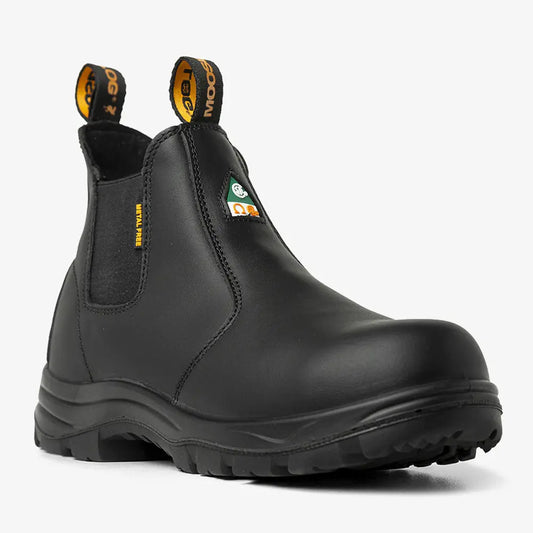
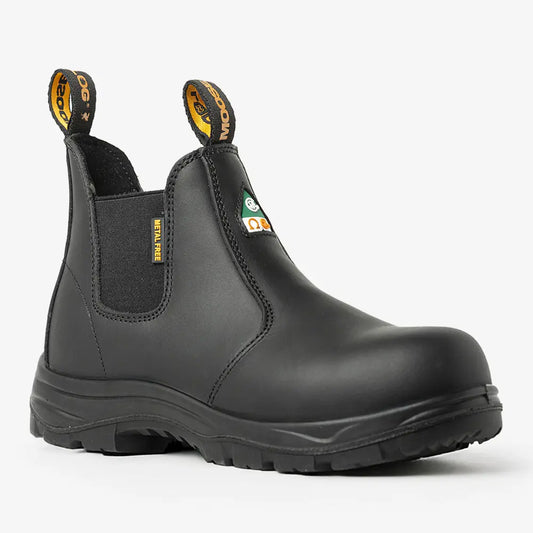
| Chelsea Work Boots | Convenient slip-on design | Less fit adjustment than laces |
| 6-Inch Lace-Up Work Boots | Adjustable fit and greater ankle coverage | Takes longer to put on and remove |
For indoor work that involves frequent walking, low-cut safety shoes may be worth considering.
For workers who value quick on-and-off convenience, Chelsea work boots provide a practical alternative.
For uneven worksites or jobs where an adjustable, secure fit matters, lace-up work boots may be preferable.
Regardless of style, verify that the footwear meets your workplace's protection requirements.
4. Match Your Safety Shoes to Workplace Hazards
The best safety shoes for one workplace may not be suitable for another.
Slippery or Oily Floors
Look for outsoles designed and tested for slip resistance on relevant surfaces. No footwear can guarantee protection against every slip.
Sharp Objects and Debris
If your work involves nails, scrap metal, or sharp debris, look for puncture-resistant footwear with an appropriate PR rating.
Electrical Hazards
Check for footwear carrying an electrical hazard (EH) rating when required.
EH-rated footwear provides a secondary form of protection under specified conditions. It is not a replacement for electrical safety procedures or specialized protective equipment.
Wet Work Environments
Choose water-resistant or waterproof construction based on your exposure. Water-resistant footwear and fully waterproof footwear are not necessarily the same.
5. Comfort and Fit: What to Check Before Buying
Protective footwear should fit securely without creating excessive pressure.
Before purchasing, consider the following:
-
Toe room: Your toes should have adequate room without pressing against the protective cap.
-
Heel fit: Excessive heel movement can cause discomfort and rubbing.
-
Arch support: Consider the support provided by the insole and midsole.
-
Breathability: Look for materials and linings appropriate for your environment.
-
Weight: Lighter footwear may feel less tiring during extended walking, although comfort depends on the complete design.
-
Sizing: Try footwear with the socks you normally wear at work.
Always check the manufacturer's sizing guidance rather than assuming every brand fits identically.
6. Safety Shoes Buying Checklist
Before buying your next pair of safety shoes, ask yourself:
-
Does this footwear meet my employer's required safety standard?
-
Do I need steel toe or composite toe protection?
-
Is puncture resistance required?
-
Do I need electrical hazard protection?
-
Is the outsole appropriate for my workplace surfaces?
-
Would low-cut, Chelsea, or lace-up footwear suit my work better?
-
Does the footwear fit comfortably with my usual work socks?
The best safety shoes are not necessarily the most expensive or the heaviest. They are the ones that provide the protection your job requires and fit you properly.
Frequently Asked Questions
What should I look for when buying safety shoes?
Start with the required safety certification and hazard ratings. Then compare toe protection, puncture resistance, slip resistance, fit, and comfort.
Are safety shoes the same as safety boots?
Both can provide certified protective features. The main distinction is typically footwear height and construction. A taller boot does not automatically provide a higher level of toe protection.
Are composite toe safety shoes as safe as steel toe shoes?
Both can meet applicable impact and compression requirements when properly tested and rated. The appropriate choice depends on workplace hazards and footwear construction.
Do all safety shoes have puncture-resistant soles?
No. Protective toe caps do not automatically mean the footwear includes puncture-resistant sole protection. Check for the relevant marking.
Can I wear Canadian CSA safety boots in the United States?
CSA certification alone does not establish compliance with every U.S. workplace requirement. Confirm the applicable standards and markings with your employer.
Final Thoughts
Buying safety shoes is about matching protection to the work you actually do.
Start with the required certification, identify the hazards you encounter, and select a design that provides a secure, comfortable fit.
MooseLog offers work footwear with composite toe protection and applicable CSA and ASTM safety ratings, including Chelsea boots, lace-up work boots, and low-cut safety shoes.