

Tus zapatos de seguridad se sienten “bien”. Así es como te convencen.
No se compran zapatos de seguridad por diversión. Se compran porque el trabajo exige protección, largas jornadas y fiabilidad. Sin embargo, muchos trabajadores terminan frustrados porque la protección está ahí, pero la comodidad desaparece rápidamente.
Si algo de lo siguiente le suena familiar, no está imaginando cosas.
Compraste botas CSA para protección, pero la comodidad desaparece después de unas horas.
Sientes los dedos de los pies apretados o presionados aunque el tamaño sea técnicamente correcto.
No está seguro de si una bota CSA más liviana realmente ayudaría o empeoraría las cosas.
Estos problemas son comunes con el calzado de seguridad, incluso cuando cumple con las normas CSA Z195 y ASTM F2413 . El problema no es que el calzado sea inseguro, sino que está diseñado más allá de la certificación.
Este artículo explica por qué ocurren estos problemas y qué es lo que realmente importa a la hora de elegir zapatos de seguridad que puedas usar todo el día.
Los zapatos de seguridad pueden cumplir con los estándares CSA y ASTM y aún así fallar en sus pies.
Las certificaciones CSA y ASTM existen para verificar la protección. Resistencia al impacto, resistencia a la compresión, protección contra perforaciones y rendimiento ante riesgos eléctricos. Estos estándares son esenciales e innegociables.
Lo que no miden es la fatiga a largo plazo.
La fatiga a largo plazo en el calzado de seguridad está impulsada por tres factores físicos que CSA y ASTM no prueban:
En primer lugar, la masa total del calzado y la ubicación de ese peso en el pie. El peso concentrado en la puntera o el talón aumenta el esfuerzo muscular con cada paso, especialmente en turnos largos.
En segundo lugar, la rigidez de la entresuela y el patrón de flexión. El calzado que resiste el movimiento natural del pie obliga a los músculos de la parte inferior de la pierna a compensar, lo que acelera la fatiga tras horas en superficies duras.
En tercer lugar, la distribución de la presión dentro del zapato. Las punteras estrechas o los componentes internos rígidos crean una presión localizada que aumenta a medida que los pies se hinchan durante el día.
Estos factores se evalúan mediante pruebas de desgaste, análisis biomecánicos y uso prolongado en campo, no mediante pruebas de impacto o compresión en laboratorio. Por eso, un calzado de seguridad puede cumplir con todos los requisitos de CSA y ASTM y aun así resultar agotador al final de un turno.
El cumplimiento garantiza la protección. El diseño determina la resistencia.
¿Por qué la comodidad disminuye después de unas horas?
Esto rara vez se debe a la talla o al ajuste inicial. Sucede porque la fatiga se acumula más rápido de lo que el cuerpo puede recuperarse durante la jornada laboral.
En el calzado de seguridad, la fatiga se acumula cuando el calzado se resiste al movimiento natural del pie. El exceso de peso, las entresuelas rígidas y las suelas rígidas aumentan el esfuerzo muscular requerido en cada paso. Incluso las pequeñas ineficiencias se acumulan al repetirse miles de veces sobre hormigón.
Una entresuela rígida limita el avance del pie. Una suela rígida reduce la absorción de impactos y aumenta las fuerzas de reacción del suelo. Como resultado, las pantorrillas, los arcos y los músculos estabilizadores permanecen activos más tiempo del debido. El flujo sanguíneo se vuelve menos eficiente, se acumula calor dentro del calzado y el tejido blando comienza a hincharse.
Por eso, usar zapatos de seguridad puede resultar cómodo durante la primera hora, aceptable a la tercera y agotador a la sexta. El calzado no falla al instante. Está sobrecargando lentamente los músculos.
La comodidad que desaparece después de unas horas no es un problema de adaptación. Este afecta la sensación de la superficie. La fatiga se debe al peso, la flexión y la forma en que la zapatilla soporta los impactos repetidos a lo largo del tiempo. Esto es un problema de diseño y solo se nota tras un uso prolongado.
¿Por qué sientes calambres en los dedos de los pies incluso cuando la talla es la correcta?
Sientes los dedos de los pies apretados o presionados aunque el tamaño sea técnicamente correcto.
Este es uno de los problemas más incomprendidos en el calzado de seguridad.
La longitud por sí sola no determina el ajuste. La forma de la puntera es igualmente importante. Muchos zapatos de seguridad utilizan punteras estrechas o muy cónicas para reducir los costos de material o lograr una apariencia específica.
Incluso cuando la tabla de tallas indica la longitud correcta, los dedos de los pies pueden sentirse comprimidos en los laterales o en la parte superior. Esta presión aumenta a lo largo del día, especialmente cuando los pies se hinchan durante largas jornadas.
Una puntera adecuada para un calzado de seguridad debe permitir la separación natural de los dedos, manteniendo la protección CSA y ASTM. De lo contrario, la incomodidad es inevitable, independientemente de la talla.
La confusión en torno a los zapatos de seguridad más ligeros
Si no está seguro de si una bota CSA más ligera realmente ayudaría o empeoraría las cosas, esta duda tiene sentido. Un peso más ligero suele interpretarse como una menor protección.
Desde una perspectiva ergonómica y ortopédica, el problema no es solo el peso, sino cómo este interactúa con el movimiento humano a lo largo del tiempo.
En el calzado de seguridad, el exceso de masa aumenta la energía necesaria para levantar y balancear el pie en cada paso. Cuando dicha masa se concentra en la puntera, como en los diseños tradicionales con puntera de acero, aumenta el efecto palanca sobre el tobillo y la parte inferior de la pierna. Desde el punto de vista ortopédico, esto aumenta la carga muscular y acelera la fatiga al estar de pie o caminar durante períodos prolongados.
Muchos zapatos de seguridad modernos utilizan punteras de composite en lugar de acero. Esto les permite cumplir con los requisitos de CSA y ASTM, a la vez que reduce el peso en la parte delantera del pie. Ergonómicamente, esto mejora la eficiencia de la marcha al reducir la resistencia rotacional durante la transición de un paso a otro.
Al reducir el peso y distribuirlo de forma más uniforme por el calzado, el cuerpo gasta menos energía en cada zancada. Tras miles de pasos, esto se traduce en una menor fatiga acumulada, menor tensión en los músculos estabilizadores y una mayor resistencia en superficies duras.
La clave está en elegir calzado de seguridad diseñado con equilibrio ergonómico del peso y soporte ortopédico, no simplemente con materiales más ligeros. La construcción ligera solo funciona cuando se combinan la integridad estructural, el control de la flexión y la distribución de la carga. Ligero no significa débil cuando está correctamente fabricado.
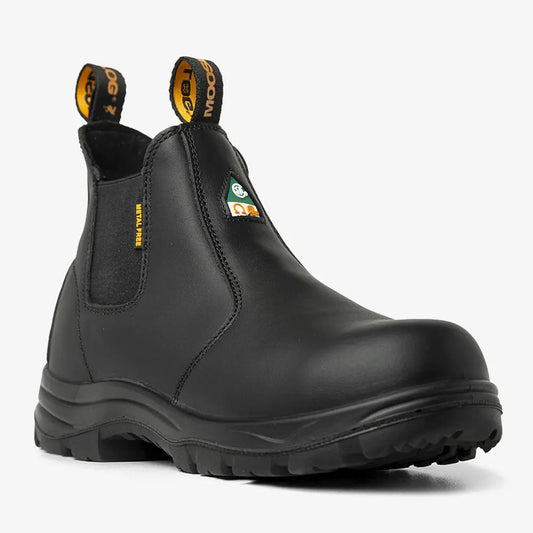
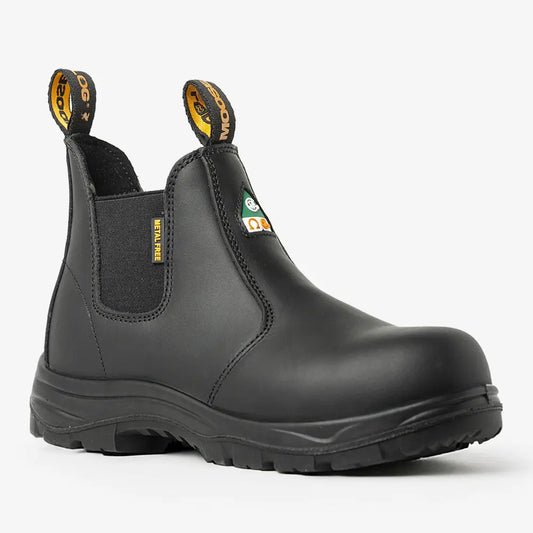
Para los trabajadores que prefieren un estilo sin cordones, un diseño de puntera compuesta con distribución equilibrada del peso, como nuestros zapatos de seguridad con puntera compuesta Chelsea , ayuda a reducir la fatiga causada por el exceso de masa en la parte delantera del pie.
Lo que realmente importa a la hora de elegir calzado de seguridad
La certificación CSA y ASTM debe ser el punto de partida, no la meta.
Más allá del cumplimiento, debes prestar atención a:
- Forma de la puntera y volumen interno
- Peso total y cómo se distribuye
- Flexibilidad de la entresuela y manejo de impactos
- Comportamiento de la suela en superficies duras como el hormigón
Estos factores determinan si los zapatos de seguridad le brindarán soporte durante todo un turno o le desgastarán lentamente.
Una opción con cordones, flexibilidad controlada y soporte estable, como el calzado de seguridad con puntera compuesta McCoy , es más adecuada para los trabajadores que necesitan estructura sin rigidez excesiva.
Qué significa esto para su próximo par de zapatos de seguridad
Si su calzado de seguridad actual presenta los tres problemas mencionados, la solución no es buscar suavidad ni comodidad a corto plazo. La clave está en cómo el calzado gestiona el movimiento, la carga y la fatiga a lo largo de un turno completo.
Las normas CSA y ASTM le indican si un par de zapatos de seguridad puede protegerlo de peligros específicos. Las directrices del Centro Canadiense de Salud y Seguridad en el Trabajo sobre permanecer de pie durante períodos prolongados muestran que la fatiga aumenta cuando el calzado no gestiona eficazmente el movimiento y la presión.
Al evaluar su próximo par de zapatos de seguridad , preste atención a cómo se comportan cuando su cuerpo está cansado, no cuando todo aún se siente fresco. La comodidad al final del día es la señal más importante. Sus pies le dirán rápidamente si un diseño le favorece o le perjudica.
Preguntas frecuentes
¿Las normas CSA y ASTM garantizan la comodidad en el calzado de seguridad?
No. Las normas CSA y ASTM confirman la protección contra riesgos específicos como impacto, compresión y perforación. No miden la fatiga, la acumulación de presión ni la comodidad a largo plazo durante el uso prolongado.
¿Por qué los zapatos de seguridad se sienten bien al principio pero incómodos después?
Porque la fatiga se acumula con el tiempo. El peso, la rigidez y los patrones de flexión deficientes obligan a los músculos a esforzarse más con cada paso. Las molestias suelen aparecer después de varias horas, no de inmediato.
¿Pueden los zapatos de seguridad más ligeros realmente reducir la fatiga?
Pueden, si el peso se reduce y se distribuye correctamente. Desde una perspectiva ergonómica y ortopédica, reducir la masa en la puntera y equilibrar el calzado puede reducir el esfuerzo muscular durante turnos largos. La ligereza solo ayuda cuando está diseñada correctamente.
¿Por qué siento calambres en los dedos de los pies incluso cuando la talla es la correcta?
La forma de la puntera es tan importante como la longitud. Muchos zapatos de seguridad usan punteras estrechas o cónicas que restringen el movimiento natural de los dedos, lo que genera una presión que aumenta a medida que los pies se hinchan a lo largo del día.
¿Se supone que los zapatos de seguridad deben sentirse rígidos sobre el concreto?
Deben sentirse estables, no rígidos. Un calzado demasiado rígido transfiere más impacto a las piernas y articulaciones. Un buen calzado de seguridad equilibra la protección con una flexibilidad controlada para reducir la fatiga en superficies duras.
¿A qué debo prestar atención al elegir zapatos de seguridad para turnos largos?
Mira más allá de la certificación. Presta atención a la forma de la puntera, la distribución del peso, la flexibilidad de la entresuela y cómo interactúa la suela con el hormigón. Estos factores determinan el rendimiento del calzado tras horas de uso.