

Cómo leer las clasificaciones del calzado de seguridad: EH, ESD, protección contra perforaciones y resistencia al deslizamiento
El calzado de seguridad cuenta con varias marcas técnicas. Estas marcas ayudan a los trabajadores a elegir calzado que cumpla con los requisitos eléctricos, antipinchazos y antideslizantes en una amplia gama de entornos laborales. Muchas personas ven la información de CSA Z195-14 o ASTM F2413-24 en sus zapatos sin saber qué significa cada símbolo. Esta guía explica cómo confirmar la clasificación de riesgo eléctrico, la clasificación de ESD, la protección contra pinchazos y la resistencia al deslizamiento. El objetivo es brindarle una forma clara de identificar estas características en cualquier calzado de seguridad certificado.
Por qué son importantes estas calificaciones
Cada clasificación existe para un riesgo específico. Los trabajos eléctricos, el ensamblaje de dispositivos electrónicos, las obras de construcción y las superficies húmedas requieren calzado que supere las pruebas de CSA o ASTM. El calzado certificado reduce el riesgo y garantiza que los lugares de trabajo cumplan con las normas de salud y seguridad. La búsqueda de estos temas se realiza entre trabajadores que desean verificar que su calzado cumpla con las normas antes de entrar en el lugar de trabajo.
Cómo saber si un zapato tiene clasificación EH
La clasificación de riesgo eléctrico aparece en la etiqueta de certificación dentro del calzado. La encontrará impresa junto a la línea CSA o ASTM. La marca se ve así:
ASTM F2413 EH (Etiqueta ASTM en la lengüeta de su calzado de seguridad)

o
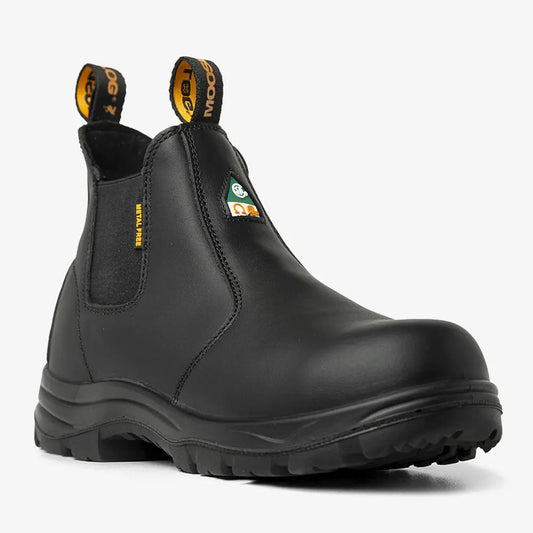
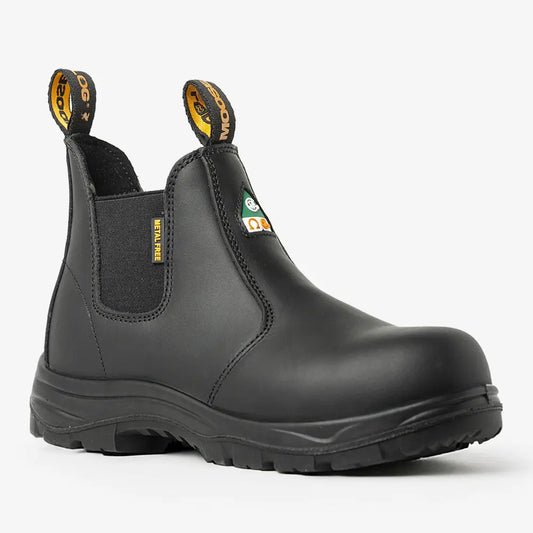
CSA Z195 EH (Omega naranja sobre fondo blanco)

El calzado EH aísla al usuario de circuitos abiertos en condiciones secas hasta un nivel de prueba de 18 kilovoltios. Esta protección ayuda a los trabajadores que operan equipos que pueden exponerlos a fuentes eléctricas. Puede confirmar la clasificación leyendo la etiqueta interior, las especificaciones del producto o la información de seguridad proporcionada por el fabricante. El calzado EH debe cumplir estrictos requisitos de aislamiento durante las pruebas de laboratorio, según las normas CSA y ASTM.
Para obtener información de fondo, el Centro Canadiense de Salud y Seguridad en el Trabajo explica los requisitos de protección eléctrica para el calzado certificado:
https://www.ccohs.ca/oshanswers/prevention/ppe/footwear.html
Cómo saber si un zapato es ESD
Una clasificación ESD controla la descarga estática. Esto protege dispositivos electrónicos, sensores y equipos de precisión. Verá el indicador impreso en la etiqueta de la lengüeta o en la caja de zapatos. El símbolo es una pequeña mano y una chispa.
Busque términos como:
ESD
DAKOTA DEL SUR
Disipador electrostático
ASTM F2412 ESD


La clasificación exige que el calzado mantenga una resistencia eléctrica dentro de un rango definido. Este rango permite que el calzado absorba la electricidad estática a un ritmo seguro. El calzado ESD es compatible con plantas de fabricación, instalaciones electrónicas y salas blancas. Puede confirmar la clasificación consultando la especificación de resistencia en la ficha técnica. La CSA también describe el rendimiento del calzado ESD en sus secciones de protección eléctrica.
Para obtener referencias adicionales sobre estándares de control estático, consulte la Asociación ESD:
Qué significa un zapato a prueba de pinchazos
Mucha gente busca la frase "a prueba de perforaciones". Las normas de seguridad no utilizan este término. El calzado certificado utiliza la frase "resistente a la perforación". El nivel de resistencia depende del material y el grosor de la placa, la dureza de la suela y el filo del objeto. Todo calzado certificado debe superar una carga de prueba definida. La resistencia a la perforación implica una protección completa contra cualquier objeto y cualquier fuerza, algo que ninguna norma puede garantizar. La resistencia a la perforación proporciona una clasificación medible y probada que ayuda a los trabajadores a elegir calzado para superficies de alto riesgo.
Cómo saber si los zapatos de seguridad tienen protección contra pinchazos
La protección antipinchazos ayuda a evitar que objetos afilados penetren en la suela del zapato. Las obras de construcción, almacenes y áreas de trabajo al aire libre suelen contener clavos, grapas, varillas de refuerzo y escombros. Un zapato antipinchazos incluye una placa protectora bajo la plantilla.

La resistencia a la perforación se puede comprobar de tres maneras.
-
Triángulo Verde de la CSA
El triángulo aparece en el calzado de seguridad certificado en Canadá. Indica una puntera de material compuesto o de acero, además de una suela resistente a perforaciones. La placa debe soportar una fuerza de al menos 1200 newtons. -
Marcado ASTM F2413 PR
El calzado que cumple con la norma ASTM muestra PR en la etiqueta. La placa protectora debe resistir una fuerza de al menos 1100 newtons durante la prueba. -
Especificaciones técnicas
La página del producto suele indicar el material de la placa y el resultado de la prueba de perforación. Esto confirma si el calzado utiliza una placa compuesta o de acero.
La protección contra perforaciones respalda los sitios de trabajo que involucran demolición, enmarcado, techado, paisajismo y recolección de residuos.
¿Es SRA mejor que SRC?
Las clasificaciones de resistencia al deslizamiento ayudan a los trabajadores a comprender el rendimiento del calzado en pisos mojados, baldosas lisas y superficies aceitosas. Las clasificaciones más comunes son SRA, SRB y SRC.
SRA pasa una prueba en baldosas de cerámica con una solución de jabón diluido.
SRB pasa una prueba en acero con una solución de glicerol.
SRC pasa tanto SRA como SRB.
El SRC ofrece la cobertura más amplia, ya que incluye ambas superficies de prueba. Los trabajadores de la producción alimentaria, la atención médica, las plantas automotrices y las cocinas comerciales confían en la resistencia al deslizamiento para reducir las lesiones. Puede confirmar la clasificación consultando la etiqueta del calzado o las notas técnicas del fabricante.
Para obtener detalles sobre los procedimientos de prueba de deslizamiento, el Ejecutivo de Salud y Seguridad del Reino Unido ofrece una descripción clara de la medición de la resistencia al deslizamiento:
https://www.hse.gov.uk/slips/footprocure.htm
Cuándo se aplica cada calificación
Las clasificaciones EH respaldan trabajos eléctricos, funciones de mantenimiento y entornos de almacén.
La ESD se aplica a la producción de productos electrónicos y al ensamblaje de precisión.
La resistencia a la perforación protege a los trabajadores en la construcción y la gestión de tierras.
SRC ayuda a los trabajadores que permanecen de pie o caminan sobre pisos mojados o lisos durante períodos prolongados.
Elegir la clasificación correcta reduce el riesgo de lesiones y cumple con las normas de acceso al sitio. Muchos empleadores canadienses siguen la guía CSA Z195 al emitir requisitos para el calzado de seguridad. Los empleadores estadounidenses utilizan la norma ASTM F2413 para la certificación del calzado.
Recursos adicionales para los lectores
- Cómo leer los símbolos de calzado de seguridad y botas de trabajo aprobados por la CSA
- ¿Qué significa ASTM F2413 en las botas de trabajo?
- Guía de calzado de seguridad aprobado por la CSA
Conclusión
El calzado de seguridad lleva símbolos que indican protección eléctrica, control de estática, resistencia a la perforación y resistencia al deslizamiento. Puede confirmar cada clasificación leyendo la etiqueta de certificación interior, consultando la ficha técnica oficial del producto y revisando la información de CSA o ASTM. Los trabajadores que comprenden estas marcas eligen el calzado con confianza y cumplen las normas de seguridad laboral.
Si busca calzado de seguridad con las certificaciones CSA y ASTM, explore nuestra gama completa de calzado de seguridad con doble certificación . Verá cada clasificación en la información del producto para que pueda elegir el calzado que mejor se adapte a sus necesidades laborales.