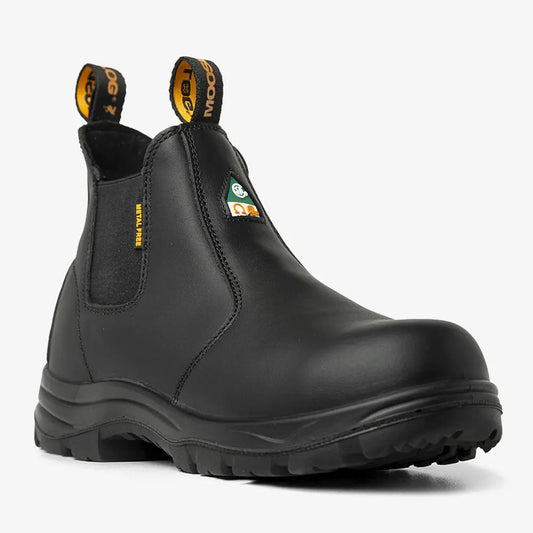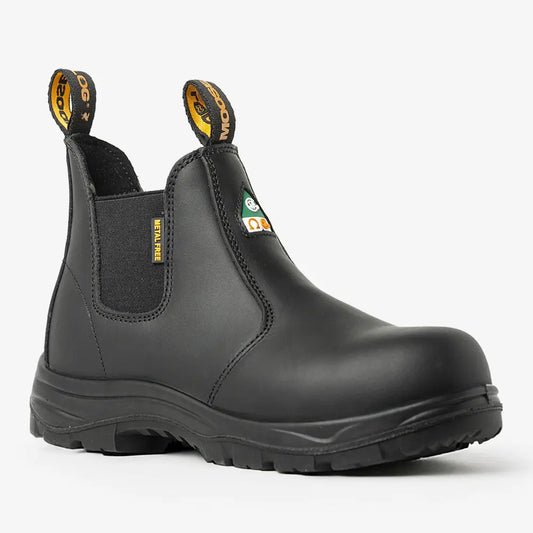


Chainsaw Boots Explained: Logger Boots for Forestry Work
Chainsaws do not play around. A modern chainsaw chain can move at speeds over 20 meters per second, which means a mistake can turn into a serious injury almost instantly. At full throttle, chains can reach speeds around 30 m/s, which is why safety agencies publish detailed chainsaw safety guidelines for workers operating this equipment.
Because of that, forestry workers rely on protective equipment built specifically for chainsaw work.
Chainsaw boots exist for that exact reason. They look like heavy-duty work boots from the outside, but inside they contain layers designed to slow down or stop a chainsaw chain before it cuts deep into your foot.
Many people confuse chainsaw boots with regular safety boots. They are built for completely different hazards. A construction worker needs protection from falling objects, punctures, and slippery surfaces. A logger needs protection from a spinning chain moving faster than a sprinting athlete.
That difference changes everything about how these boots are built.
What Is Special About Chainsaw Boots?
Chainsaw boots contain cut-resistant layers designed to interfere with the chain of a chainsaw. When the moving chain hits the boot, the internal fibres pull into the chain and jam the mechanism. The goal is simple: stop the chain as fast as possible.
Manufacturers usually use high-strength fibres similar to Kevlar or ballistic nylon. These fibres unravel when the chain touches them. The loose strands get caught in the chain and clutch system, slowing the chain dramatically. Chainsaw protective footwear is tested under standards such as the chainsaw protective footwear standard, which evaluates how these materials interact with a moving chain.
This system works very differently from the protection found in regular work boots. Standard safety boots focus on:
- impact protection
- compression protection
- puncture resistance
Chainsaw boots focus on cut protection.
Most chainsaw boots also include additional features suited for forestry environments:
- thick full-grain leather uppers
- aggressive lug outsoles for traction
- reinforced toe protection
- tall shafts for ankle support
- water resistance for wet forest conditions
These boots are built to survive mud, bark, wet ground, and steep terrain all day long.
What Kind of Boots Do Loggers Wear?
Professional loggers wear logger boots, which are tall, heavy-duty boots built specifically for forestry work.
Logger boots usually include:
- tall shafts (often 8–10 inches)
- thick leather construction
- aggressive outsoles
- a raised heel
Many logger boots also include chainsaw protection layers depending on the model.
Forestry work is brutal on footwear. Workers walk across fallen trees, slippery slopes, loose soil, and debris. Boots that work perfectly on a warehouse floor would fail almost immediately in that environment.
Logger boots became popular because they solve several problems at once:
- stability on uneven ground
- durability against rough terrain
- ankle protection in dense forest areas
- traction on wet wood and mud
For anyone spending full days cutting timber or clearing land, these boots are simply part of the uniform.
What Is the Difference Between Class 1 and Class 2 Chainsaw Boots?
Chainsaw boots are rated by protection classes. These classes describe the maximum chain speed the boot can handle during testing.
Here is the basic classification used in many forestry safety standards:
| Protection Class | Chain Speed Protection |
|---|---|
| Class 1 | up to 20 m/s |
| Class 2 | up to 24 m/s |
| Class 3 | up to 28 m/s |
Class 1 protection is the most common option. It covers the majority of chainsaws used for general forestry work.
Class 2 boots contain additional protective layers designed to stop chains moving at higher speeds. These are often used in more demanding logging operations where larger chainsaws are common.
More protection always means more material, which means the boots become heavier and thicker.
What Does Class 3 Chainsaw Boots Mean?
Class 3 chainsaw boots represent the highest level of chainsaw protection in this classification system.
They are tested to handle chains moving at speeds up to 28 meters per second, which is extremely fast. Boots that reach this level require thicker protective layers and reinforced construction.
Because of that, Class 3 boots are usually:
- heavier
- stiffer
- bulkier
These boots are built for serious forestry work involving powerful saws. They are overbuilt for casual chainsaw use, but for professional logging crews they provide an extra margin of protection.
Why Do Logger Boots Have a Big Heel?
Logger boots are famous for their large, defined heel, and there is a very practical reason behind it.

Forestry work often happens on unstable terrain. Workers climb over logs, walk on steep slopes, and move across loose soil and wet bark. A raised heel improves traction and stability on those surfaces.
The heel can also catch onto logs or branches, helping the wearer keep their footing when walking across fallen trees.
Another benefit appears when climbing trees with climbing spurs. The heel helps keep the foot positioned properly on the metal spur platform.
This design may look unusual compared to standard work boots, but in forestry environments it makes perfect sense.
Why Are Logger Boots So High?
Logger boots usually extend far above the ankle, often reaching 8 to 10 inches in height.
This tall design provides several advantages in forestry work.
First, it improves ankle stability. Forest terrain is unpredictable, and workers constantly step on roots, branches, and uneven ground. A taller boot helps keep the ankle stable.
Second, the high shaft blocks debris. Wood chips, bark fragments, and sawdust constantly fall during cutting operations. Tall boots prevent that debris from entering the boot.
Third, the taller leather structure adds durability. Forestry work destroys weak footwear quickly. A higher shaft helps the boot hold its shape and survive months of abuse.
What Boots Do Arborists Wear?
Arborists work with trees every day, which means chainsaws, climbing gear, and unpredictable terrain are part of the job.

Because of this, arborists usually wear boots designed specifically for:
- climbing
- chainsaw protection
- traction on bark and branches
Many arborist boots combine chainsaw protection with lightweight construction so workers can move easily while climbing trees.
Ground crew members who operate chainsaws frequently may choose heavier chainsaw boots, while climbers often prefer lighter boots that improve mobility.
Regardless of the exact model, arborist footwear is designed with one goal: keeping workers stable and protected while working in trees.
Are Chainsaw Boots Worth It?
Anyone using a chainsaw regularly should wear chainsaw protective boots. The protection they provide is not theoretical. It is mechanical and immediate.
A spinning chainsaw chain can tear through regular leather boots without slowing down. Chainsaw boots exist because forestry accidents have proven this again and again.
Workers who rely on chainsaws every day treat chainsaw boots the same way welders treat welding helmets or electricians treat insulated gloves. It is simply the correct equipment for the job.
Chainsaw boots are designed for forestry work. They solve a very specific safety problem that appears whenever a high-speed chain meets a human foot.