

CSA vs ASTM: Which Safety Boots Do You Need?
Working in Canada? Look for CSA Z195. Working in the United States? Look for ASTM F2413.
That's the general rule. Both standards cover protective footwear, but meeting one doesn't automatically mean a boot meets the other.
The important part is making sure your boots meet your jobsite's requirements.
What's the Difference Between CSA and ASTM?
CSA Z195 is Canada's protective footwear standard, while ASTM F2413 establishes performance requirements for protective-toe footwear in the United States.
| Feature | CSA Z195 (Canada) | ASTM F2413 (USA) |
|---|---|---|
| Primary market | Canada | United States |
| Toe protection | Grade 1 / Grade 2 | Impact and compression requirements |
| Puncture protection | CSA protective markings | PR |
| Electrical protection | ESR (Ω) | EH |
| Identification | Colour-coded symbols | Alphanumeric markings |
Neither standard is necessarily better. They use different testing and marking systems to identify protective features.
Want the full breakdown? Read our CSA-approved safety boot guide or our ASTM F2413 explained article.
Can You Wear ASTM Safety Boots in Canada?
It depends on your workplace and province.
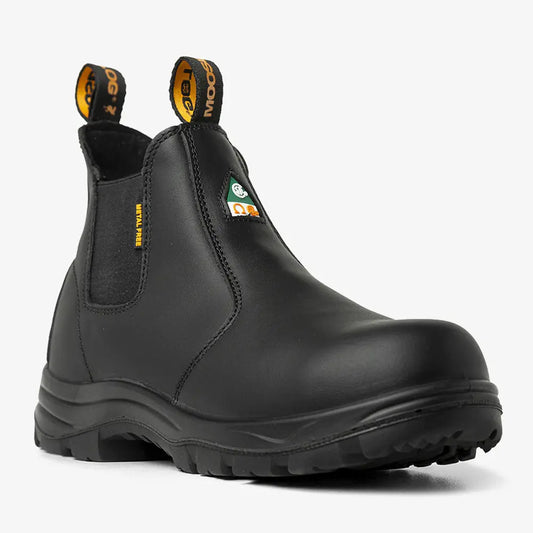
Many Canadian jobsites require CSA Z195 footwear, particularly boots displaying the green triangle for Grade 1 toe and puncture-resistant protection.
Under Canada's Occupational Health and Safety Regulations, Section 12.11, federally regulated workplaces generally require footwear meeting CSA Z195 when there's a risk of foot injury or electric shock.
However, some jurisdictions, including Alberta, recognize certain ASTM-compliant footwear.
Before buying, confirm your employer's required standard and whether you need puncture-resistant soles or electrical protection.
If your jobsite specifically requires CSA-approved boots, don't assume ASTM-only footwear will be accepted.
What Do the Safety Markings Mean?
Two boots can meet the same standard while offering different protection.
Here are the markings worth checking:
| Marking | Meaning |
|---|---|
| CSA green triangle | Grade 1 protective toe and puncture-resistant sole |
| CSA orange Ω on white | Electric-shock-resistant footwear (ESR) |
| ASTM I / C | Toe impact and compression protection |
| ASTM PR | Puncture-resistant protection |
| ASTM EH | Electrical hazard protection |
Important: Electrical hazard ratings provide secondary protection under specified conditions. They don't replace proper electrical safety equipment or procedures.
What About Dual-Certified Work Boots?
If you work in both Canada and the U.S., dual-certified footwear can be a practical option.
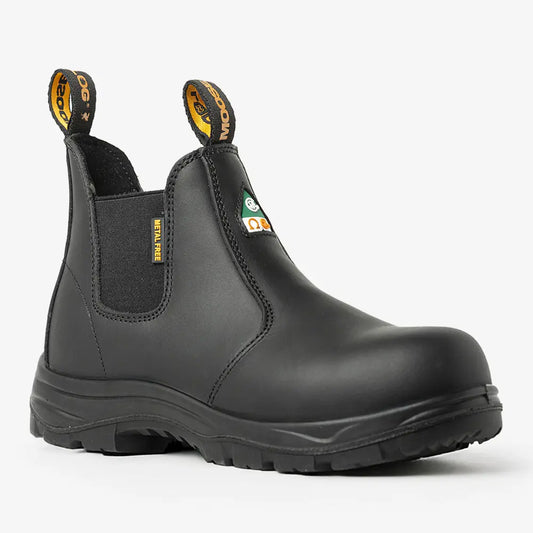
For example, our MooseLog Timber II meets both CSA Z195 and ASTM F2413 requirements, with a composite safety toe and puncture-resistant sole.
That means you can choose one pair that meets both standards, provided its specific protection ratings satisfy your workplace requirements.
Explore our CSA and ASTM certified work boots.
Which Certification Should You Choose?
- Canada: CSA Z195 is the safest starting point for checking workplace compliance.
- United States: Look for ASTM F2413 and the required protection ratings.
- Working across the border: Consider dual-certified footwear.
Still unsure? Check with your employer before purchasing.
And if you're comparing more than just certifications, our Work Boot Buying Guide covers fit, comfort, materials, and the safety features worth paying attention to.