

How is Slip Resistance Tested? Inside the ASTM F2913-24 SRO Standard
Understanding Slip Resistance
Slippery surfaces are a common hazard on jobsites. Water, oil, grease, and other contaminants can reduce traction, making a reliable work boot outsole an important part of workplace safety.
But how do manufacturers actually measure slip resistance?
In North America, ASTM F2913-24 provides a standardized laboratory method for measuring footwear traction. Rather than relying on claims about rubber compounds or tread patterns, the test produces measurable results that help evaluate how an outsole performs under controlled conditions.
Combined with ASTM F3445-24, which establishes slip-resistance performance requirements, these tests help buyers understand what SR (Slip Resistant) and SRO (Slip Resistant Outsole) ratings mean.
How the ASTM F2913-24 Test Works
ASTM F2913-24 uses a mechanical whole-shoe slip tester to measure friction between footwear and a test surface.
During testing, footwear is subjected to controlled loading, movement, and surface conditions. The equipment measures the Dynamic Coefficient of Friction (DCOF), a numerical value representing the friction generated as the footwear moves against the surface.
Testing may involve:
- Surfaces: Ceramic tile, steel, or other specified flooring materials.
- Contaminants: Water, detergent solutions, oil, or other substances.
- Measurement: Dynamic Coefficient of Friction (DCOF).
- Evaluation: Results compared against the applicable slip-resistance performance requirements.
A higher DCOF generally indicates greater resistance to sliding under the tested conditions.
However, no laboratory test can reproduce every jobsite hazard. Traction can vary with surface materials, contamination, wear, and environmental conditions.
What Do SR and SRO Mean?
Although the terms are closely related, SR and SRO refer to different levels of tested slip-resistance performance.
SR — Slip Resistant
Indicates that footwear meets specified traction requirements under standard test conditions, including wet surfaces.
SRO — Slip Resistant Outsole
Includes additional performance requirements for oily-wet conditions, making the classification particularly relevant to industrial workplaces where lubricants or other slippery contaminants may be present.
Under the ASTM F3445-24 performance framework, the commonly referenced minimum coefficient-of-friction requirements are 0.40 for specified dry and wet conditions and 0.33 for the oily-wet condition associated with SRO.
The distinction matters because not every slippery surface presents the same challenge. An outsole that performs well on wet flooring may behave differently when exposed to oil.
Independent Laboratory Testing: The Role of Intertek
Independent testing provides measurable evidence behind a manufacturer's footwear performance claims.
Intertek is an international testing, inspection, and certification organization that evaluates products against recognized technical standards.
For footwear, laboratory reports can document test conditions, recorded measurements, and whether the tested samples meet applicable performance requirements.
This makes it easier to distinguish between a general marketing claim of slip resistance and performance supported by laboratory evidence.
A Real-World Example: MooseLog Timber
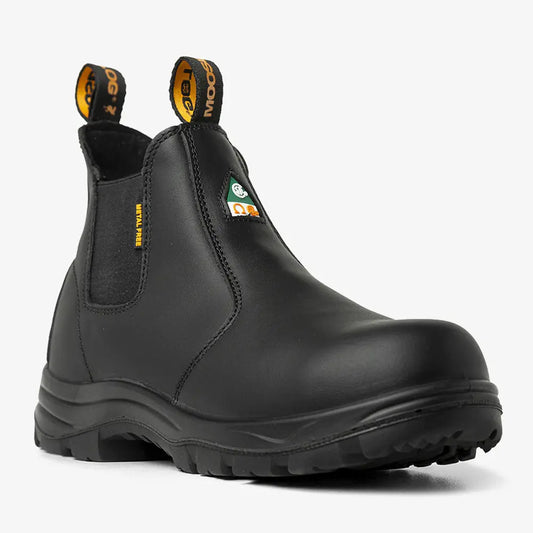
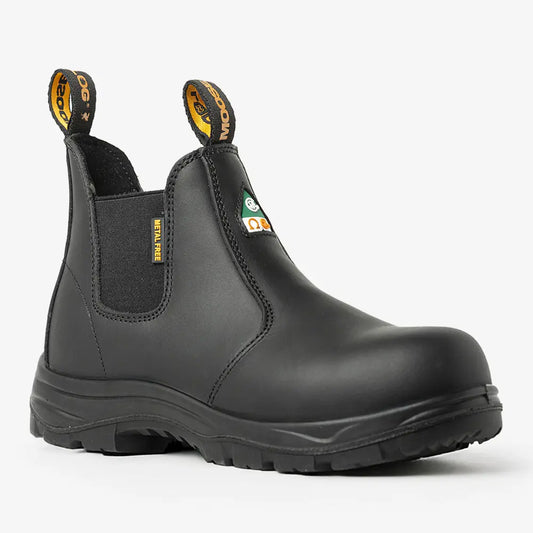
One example of this testing process is the MooseLog Timber Chelsea Work Boot.
MooseLog submitted Timber to Intertek for independent slip-resistance evaluation. Its SafeTread™ rubber outsole was tested under controlled conditions, including wet and oily surface exposure.
According to Timber's reported laboratory results, the outsole met the applicable SRO performance requirements.

Timber provides a practical example of how measurable testing can support a work boot's traction claims.
As MooseLog's footwear lineup continues to expand, it's important to evaluate the testing and safety features of each individual model rather than assuming every outsole carries identical performance ratings.
Beyond Slip Resistance: Heat-Resistant Outsoles
Slip resistance is only one aspect of outsole performance.
Some industrial environments also expose footwear to elevated temperatures, particularly around hot machinery, metal surfaces, and certain manufacturing processes.
HRO (Heat-Resistant Outsole) testing evaluates how an outsole withstands brief contact with a heated surface.
A commonly used contact-heat test exposes outsole material to approximately 300°C (572°F) for 60 seconds, followed by an examination for damage such as cracking or melting.
MooseLog Timber's reported testing also included a successful heat-resistance evaluation.
However, heat-resistant outsoles are not necessarily designed for prolonged exposure to extreme temperatures. The HRO designation describes performance under specified test conditions, not unlimited protection against heat.
Why Tested Slip Resistance Matters
A good outsole does more than feature deep tread patterns or aggressive-looking rubber lugs.
Its actual performance depends on several factors, including outsole materials, tread design, the surface being walked on, and the presence of contaminants.
Standardized testing helps provide an objective basis for evaluating that performance.
When choosing work boots, consider the conditions you encounter most frequently. Wet construction sites, oily workshop floors, smooth warehouse surfaces, and outdoor terrain may require different types of traction.
Look for documented test results and the specific safety ratings applicable to the footwear model you're considering.
Independent laboratory testing gives those claims a measurable foundation, helping workers make more informed footwear decisions.
Summary of Tests

The following table summarizes the reported laboratory test results for MooseLog Timber, used as the example throughout this article.
| Test | Standard / Test Method | Result |
|---|---|---|
| Slip Resistance (SRO) | ASTM F2913-24 / ASTM F3445-24 | Passed |
| Outsole Heat Resistance (HRO) | 300°C contact heat, 60 seconds | Passed |
| Impact & Compression | ASTM F2413-24 / CSA Z195 | Passed |
| Puncture Resistance (PR) | ASTM F2413-24 | Passed |
| Electrical Hazard (EH) | ASTM F2413-24 | Passed |
Results above refer to the Timber model's reported testing and do not automatically apply to other MooseLog footwear.
Choosing the Right Work Boots
Slip resistance isn't something you can reliably judge by appearance alone. Standards such as ASTM F2913-24 and ASTM F3445-24 help turn traction claims into measurable performance.
At MooseLog, we believe protective footwear should be backed by more than promises. Understanding the tests behind each safety feature helps you choose the right protection for your work.
Explore MooseLog Work Boots to compare available styles, outsole features, and safety ratings.
Want to try it for yourself? Explore MooseLog Timber Work Boots.