

Women in Blue-Collar Jobs (2026): The Stats Nobody Talks About
Blue-collar work is still widely seen as a men’s world. The numbers tell a different story.
Women are showing up in blue-collar industries in ways that don’t match the old assumptions, and the shift is measurable. This breakdown looks at where women are gaining ground, how those changes compare with men, and what the data says about where blue-collar work is heading next.
2026 Snapshot
- Adult unemployment rate (Jan 2026): men 3.8%, women 4.0%.
- Employment level (Jan 2026): men 86.967 million, women 77.553 million.
- Women on non-farm payrolls (Jan 2026): 79.359 million, about 50.0% of all non-farm employees.
Keep those three bullets in mind. They set the baseline for everything below.
Why These Stats Use “Non-farm” Employment
You’ll see “non-farm payrolls” referenced throughout this breakdown. Why?
U.S. labour statistics usually exclude farming because agriculture works very differently from most other jobs. Farm work is highly seasonal, often temporary, and frequently structured around family or migrant labour. Employment levels can swing sharply depending on planting and harvest cycles, which makes long-term comparisons messy and unreliable.
By contrast, non-farm payrolls cover year-round, safety-regulated jobs like construction, manufacturing, transportation, warehousing, utilities, and services. These are the roles where certification, PPE, and consistent shift work matter, and where blue-collar growth trends are easiest to track over time.
Agriculture also represents a small share of total U.S. employment. Including it would add volatility without changing the bigger picture.
For a clear comparison of women versus men in modern blue-collar work, non-farm employment is the most accurate and widely used baseline.
Myth 1: “Women are not entering blue collar work”

What the data actually shows
Women are adding headcount in blue collar heavy sectors, even when you zoom out past headlines.
- In transportation and warehousing, there were 264,000 more women on payroll in Jan 2025 than five years earlier.
- In construction, there were 194,000 more women on payroll in Jan 2025 than five years earlier.
Why this busts the myth
This is growth in two sectors people associate with physical work and safety requirements. It also spreads across the country, which usually means you are seeing a real labour shift, not a local trend.
Myth 2: “Women in construction means office jobs, not the trades”
This myth survives because people mix up industry with occupation.
Industry vs trades, in one line
- Women were 11.2% of the construction workforce in 2024.
- Women in construction and extraction occupations were about 4.3% of that workforce, even after years of growth.
The growth story that gets missed
- In 2024, the number of women working in construction and extraction occupations hit a record 366,360.
- Since 2015, the number of tradeswomen rose by almost 160,000, up 77.3%.
Translation: the trades are still male dominated by share, and the women’s headcount trend is moving in one direction.
Myth 3: “If women are growing, it must be tiny numbers that do not matter”
If you only look at totals, you'll miss the rate of change.
The simple way to read the shift
- Men still hold more blue collar roles by total headcount.
- Women are often the faster moving margin in the roles that are hiring and expanding.
Quick table based off U.S. Bureau of Labor Statistics – Employment Situation, Table B-5
| Sector | Women on payroll (Jan 2016) | Women on payroll (Jan 2026) | % Change (approx) | What to watch |
|---|---|---|---|---|
| Transportation & warehousing | 1.14M (Jan 2016) | 1.70M (Jan 2026) | +50% | Women’s share grew substantially over 10 years, even if overall share remains below half. |
| Trade, transportation & utilities | 10.85M (Jan 2016) | 11.07M (Jan 2026) | +2% | Large base where even small share changes equal tens of thousands of job growth. |
| Total non-farm | ~56.1M (Jan 2016) | 79.36M (Jan 2026) | +41% | Baseline growth across all industries reflects broad labor force expansion. |
What changed over the last decade
Transportation and warehousing saw the most dramatic growth in women on payroll, rising by about 50 % between 2016 and 2026. Total nonfarm employment of women also increased significantly. Even where share percentages move slowly, large bases mean real job gains are big.
Myth 4: “Apprenticeships are already equal now”

They are improving, and the gap is still real.
What to show in a 2026 stat hub
- The long run trend: women apprentices have grown a lot since the mid 2010s, and participation still lags women’s share of the labour force.
- Add a pay reality box for completers if you want a hard myth buster: IWPR reports FY 2024 median hourly wages for apprenticeship completers of $22.00 for women vs $34.68 for men.
This is where you can say, plainly: pipeline access improved, outcomes still vary, and the fastest gains tend to show up where programs recruit and support women intentionally.
Myth 5: “Women leave blue-collar jobs faster than men”
This belief comes up often in hiring discussions. The data does not support it.
According to the U.S. Bureau of Labor Statistics Job Openings and Labor Turnover Survey (JOLTS), quit rates are consistently highest in service and retail industries and lower in construction, manufacturing, transportation, and utilities. These lower-quit industries make up the core of blue-collar work.
Because blue-collar sectors already have lower voluntary quit rates overall, women working in these roles do not show higher quit behaviour compared with men at the industry level. This contrasts sharply with higher-churn sectors many women transition from, such as retail and hospitality.
Research summarized by the Institute for Women's Policy Research also shows that in construction and manufacturing, women’s attrition is highest during the early entry period, then stabilizes. After that point, retention patterns closely track men working in the same occupations.
The takeaway is straightforward. Women are not entering blue-collar work temporarily and leaving at higher rates. Once established, retention aligns with the lower-churn nature of blue-collar industries, which matters for training investment, apprenticeships, and long-term workforce planning.
Where this matters in work
One common myth is that women get more tired than men in blue-collar roles. The data doesn’t really support that as a gender issue. Fatigue shows up when the work setup is wrong, not because of who is doing the work.
Blue-collar jobs are physical and repetitive. Long hours on concrete, constant movement, and repeated stops and starts wear on anyone over a full shift. In that environment, gear matters more than gender. Poorly fitting or overly bulky equipment increases strain, slows movement, and adds friction to the day.
This is where workwear and footwear enter the conversation. When boots don’t match the demands of the job, fatigue builds faster. When they do, the work stays manageable longer, regardless of who is wearing them.
The data shows where women are entering and staying in blue-collar work. Day-to-day experience helps explain why retention depends less on gender and more on how well the job, the environment, and the equipment fit together.
A quiet note from MooseLog

Most safety footwear companies still treat women as an afterthought. Many stop at smaller sizes, or scale down a men’s boot and call it unisex. In practice, that often means poor fit, extra weight, and more fatigue over a long shift.
We took a different approach.
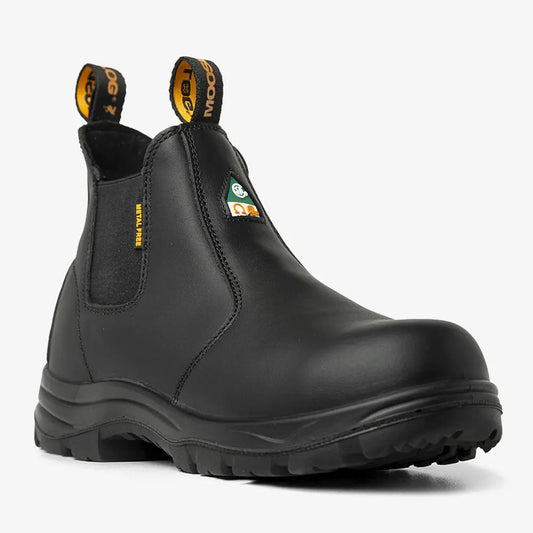
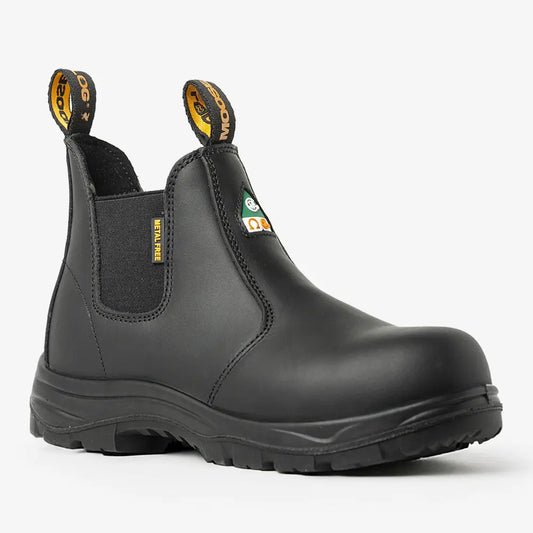
MooseLog offers women’s work boots built on a women’s last, not resized men’s models. That means the shape, balance, and fit are designed around how women actually move through a workday. The boots are CSA and ASTM certified and they’re built to handle long hours and constant movement.

This isn’t about making work boots look different. It’s about acknowledging that as more women enter and stay in blue-collar roles, equipment has to keep up with reality.
If you’re comparing options, start with certification and fit. The rest follows.
FAQ
What counts as a blue collar job in this post?
Roles tied to physical operations and on site work, including construction, manufacturing, transportation, warehousing, utilities, and many field technician roles.
Are women actually growing in construction trades or only in construction offices?
Both exist. Women were about 11.2% of the construction industry workforce in 2024, while women in construction and extraction occupations were about 4.3%.
What is the clearest sign women are growing in blue collar industries?
Five year payroll changes are a clean signal. One example: transportation and warehousing added 264,000 more women on payroll in Jan 2025 vs five years earlier.
What do 2026 numbers say about women vs men in the labour market overall?
In Jan 2026, adult unemployment was 3.8% for men and 4.0% for women.
Is PPE fit still a problem for women?
Yes. Research and reporting still show PPE and workwear are often designed around male proportions, which can lead to poor fit for women.
Are apprenticeships closing the gap?
Participation has improved over time, and women are still underrepresented relative to their share of the labour force. Pay outcomes for completers can also differ by gender.