

Why More People Are Leaving Office Jobs for Skilled Trades in 2026
This shift didn’t start in 2026. It just became impossible to ignore.
Over the past few years, the idea that white-collar work equals safety has taken a hit. Layoffs rolled through tech, finance, media, and consulting. Credentials multiplied while job security shrank. At the same time, skilled trades kept moving. Projects continued. Work stayed local. Paycheques stayed predictable.
More people are looking at blue-collar work again, because really we're forced to at this point.
Office Jobs Aren’t the Safe Bet They Used to Be
For a long time, office work sold stability. Degrees led to desks. Desks led to careers. That path now looks a lot thinner.
Companies cut roles faster than they used to.
According to the U.S. Bureau of Labor Statistics Job Openings and Labor Turnover Survey, total layoffs and discharges reached about 1.8 million in 2025, with the layoff rate at 1.1 percent. One of the highest levels in recent years and a sign of increased workforce instability. (Source: U.S. Bureau of Labor Statistics, JOLTS Report, December 2025)
Outsourcing moved beyond manufacturing into accounting, design, support, and analysis. Automation didn’t replace every job, but it did compress teams. One person now covers what used to be three roles.
Credential inflation followed. Jobs that once asked for experience now ask for multiple degrees, certifications, and years of niche exposure. Even then, nothing is guaranteed.
The result is a workforce that feels disposable.
Blue-Collar Pay Has Quietly Caught Up
This part doesn’t get talked about enough.
Blue-collar wages climbed steadily while white-collar pay stalled or flattened. Overtime became common. Union contracts held firm. Infrastructure spending kept crews busy.
Many trades now offer income that competes with mid-level office roles, especially once overtime, benefits, and predictable raises are factored in. There is no mystery here. When demand stays high and supply shrinks, pay follows.
The skilled trades have an aging workforce. Retirements outpace new entrants. Employers respond the only way they can: better wages, steadier hours, clearer progression.
According to the 2025 FlexJobs Workplace Shifts Report, 62% of professionals said they would consider moving from white-collar to blue-collar work if it offered better pay and stability.
Perceived Status vs Real Standing
White-collar work is often treated as higher status by default. In practice, many office roles come with little authority, little security, and little leverage. A title does not protect you when your work is easily outsourced, automated, or consolidated.
That gap between perception and reality is showing up in the data. A Business Insider analysis of U.S. labour market data showed that in 2024 and 2025, white-collar job postings declined sharply across roles like tech, finance, and professional services, making traditional office titles harder to access and easier to lose. Demand for many white-collar roles fell while competition intensified, particularly for early- and mid-career positions.
Blue-collar work operates on a different logic. When your skills are local, tangible, and in short supply, your position is clearer. You know where you stand. So does everyone else.
That clarity creates real stability. You can see the demand for your work. You can measure your value without waiting for performance cycles or restructuring announcements.
Status is not a label. It’s the ability to remain useful when conditions change.
Bounded Stress vs Endless Stress
Blue-collar work is demanding. It takes a physical toll. Bodies wear down. Injuries happen. Anyone pretending otherwise is lying.
The difference is how the stress behaves.
Physical work is usually bounded. You feel it during the shift. The work ends. Recovery is possible. The stress has a shape and a stopping point.
Many white-collar roles operate the opposite way. The stress is diffuse and ongoing. Long hours blur into personal time. Expectations shift without warning. Performance is constantly evaluated, but rarely resolved. The work never clearly ends.
That kind of pressure accumulates quietly. It follows people home. It sits in the background. Over time, it becomes harder to separate effort from anxiety.
Neither path is easy, but for many people, stress they can see, measure, and recover from is easier to live with than stress that never fully switches off.
Who This Shift Makes Sense For
This shift isn’t for everyone. And if you’re reading this thinking, “this doesn’t apply to me,” you might be right.
But it does apply to a very specific group of people, even if they don’t like admitting it.
If you were told growing up that success meant a degree, a desk, and a title, this is probably about you. If your peers all aimed for office jobs because that was the “smart” path, this is definitely about you. If you absorbed the idea that working with your hands meant settling, even though no one ever really explained why, then yes, this is about you too.
A lot of people in this group did everything they were supposed to do. They followed the script. They got educated. They learned the language. They chased roles that looked impressive on paper. What they didn’t expect was how fragile those roles would feel once they were inside them.
For them, blue-collar work isn’t a statement or a rejection of ambition. It’s a recalibration. It’s choosing work where effort connects clearly to outcome, where skills don’t need constant rebranding, and where demand doesn’t disappear behind a reorg or a platform change.
That doesn’t mean this path works for everyone. Some people genuinely thrive in ambiguity. Some need flexibility that structured trades can’t offer. Physical limits matter, and pretending otherwise helps no one.
But the people moving toward blue-collar work right now aren’t chasing an identity. They’re questioning a set of assumptions they inherited without ever really testing. And they’re choosing work that feels legible, durable, and easier to stand behind long term.
The Data Is Already Showing the Shift
This isn’t a vibes-based trend. The labour data is already moving.
According to the U.S. Bureau of Labor Statistics, employment growth in construction, utilities, transportation, and skilled trades remained stable through 2024–2025, while many professional and business services categories either stalled or declined. Construction employment alone added over 300,000 net jobs between 2023 and 2025, despite higher interest rates and slower overall growth.
At the same time, white-collar churn increased.
The BLS Job Openings and Labor Turnover Survey (JOLTS) shows that layoffs and discharges in professional and business services rose materially in 2024 and stayed elevated through 2025. These roles now experience faster hire-fire cycles than they did even five years ago.
Pay data tells the same story.
A 2024 analysis by the Economic Policy Institute found that real wage growth for many blue-collar occupations outpaced inflation, driven by labour shortages and union contracts, while inflation-adjusted wages for mid-level white-collar roles flattened. In some trades, total compensation increased even as office salaries stayed static.
Worker sentiment lines up with the numbers.
In a 2025 Gallup workforce survey, job satisfaction and perceived security ranked higher among skilled trade workers than among employees in professional services and tech. Respondents consistently cited clearer expectations, steadier demand, and more predictable income.
None of this suggests that blue-collar work is “better” in some moral sense. It shows something simpler.
When labour is local, necessary, and hard to replace, it holds value longer.
Conclusion: Two Sides of the Same Window

On one side of the glass, people are seated at desks. Climate-controlled. Quiet. Watching calendars, emails, and metrics move without them.
On the other side, a few feet away, a worker is suspended in the open air. Harnessed in. Focused. Doing work that has to happen here, now, by someone who knows how.
It’s the same building, the same economy, and the same moment in time, yet the experience on each side couldn’t feel more different.
Inside, stress tends to linger and multiply. Outside, effort connects directly to outcome. One side relies on systems, titles, and layers of decision-making. The other relies on skill, coordination, and equipment that has to work every single time.
This isn’t about glorifying one path or dismissing the other. It’s about noticing where stability actually shows up when conditions tighten and assumptions fall apart.
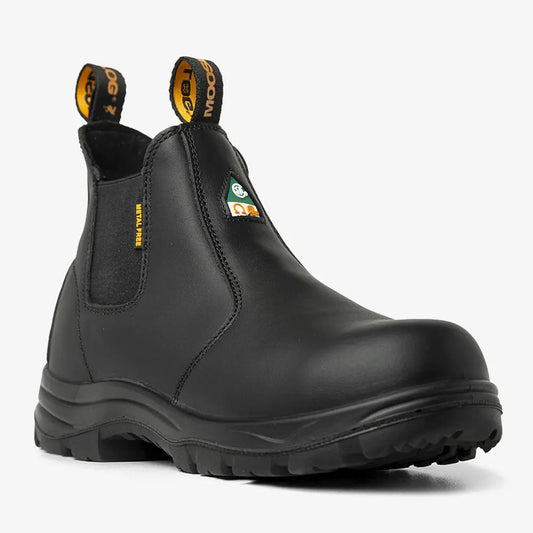
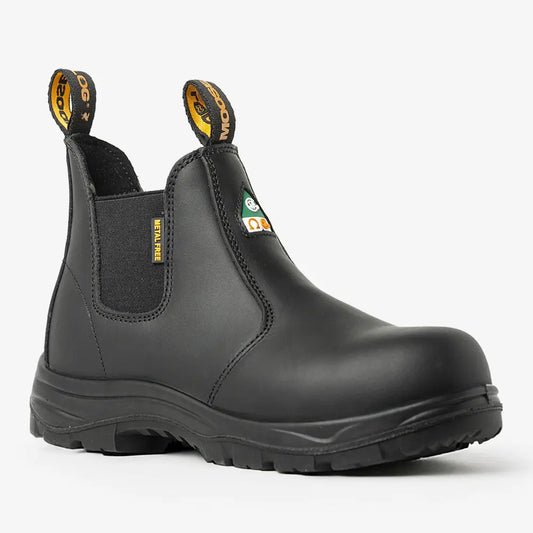
If you’re working on the outside of the glass, your safety is non-negotiable, your footing matters, and the gear you rely on has to hold up day after day. That’s where MooseLog comes in, building CSA and ASTM certified work boots for people whose work keeps everything else functioning, even when no one inside notices.
So when you look at that window, the question isn’t which side looks easier.
It’s which side you’d rather stand on when things stop feeling predictable.
FAQ
Are white-collar jobs disappearing?
No. They’re becoming more competitive, more consolidated, and less stable at the margins. Entry- and mid-level roles are the most affected.
Is blue-collar work actually more secure long term?
In many cases, yes. Work that is local, regulated, and skill-specific is harder to outsource or automate quickly.
Does this shift apply in Canada as well as the U.S.?
Yes. Canadian labour data shows similar patterns in construction, infrastructure, and skilled trades, especially where retirements outpace new entrants.
Is pay really comparable between trades and office roles?
In many regions, skilled trades now match or exceed mid-level office salaries once overtime, benefits, and steady hours are included.
Are physical limits a real concern?
Absolutely. Trade work carries physical demands. Long-term planning, safety equipment, and proper footwear matter more, not less.
Why emphasize certified work boots?
Because compliance and protection reduce injury risk. CSA and ASTM standards exist to protect workers doing necessary, physical work.