


Parcourir Chaussures de sécurité homologuées CSA à Prince Albert
-
Bottes de sécurité Chelsea pour homme, embout composite ASTM et CSA - Modèle 5666
Prix habituel $169.99 CADPrix habituel Prix soldé $169.99 CADPrix unitaire par -
Bottes de sécurité Chelsea pour femmes, embout composite ASTM et CSA - Modèle 666
Prix habituel $169.99 CADPrix habituel Prix soldé $169.99 CADPrix unitaire par
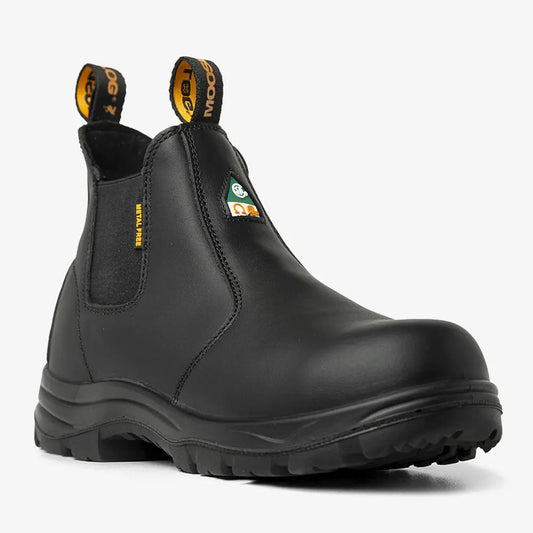
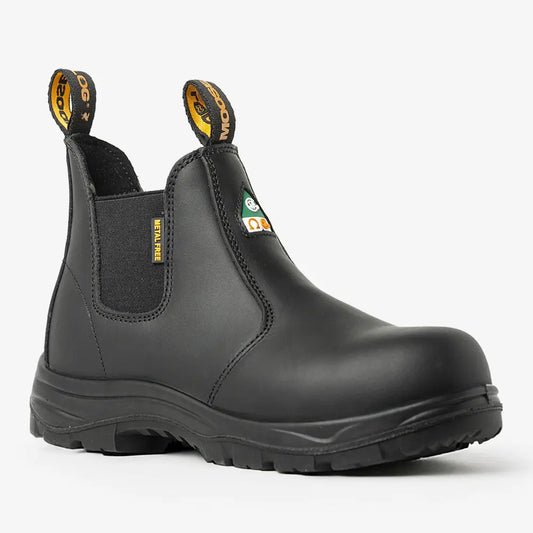


Le triangle vert sur les bottes de sécurité CSA signifie que les bottes sont dotées d'un embout de protection de classe 1 et d'une semelle résistante aux perforations. Ce marquage est obligatoire pour les travaux impliquant des objets lourds ou des débris tranchants, comme la construction ou l'entreposage. La CSA utilise ce marquage pour attester que les bottes de sécurité répondent aux principales normes de sécurité en matière de protection contre les chocs et de protection des pieds.

Green Triangle
The green triangle marks safety footwear with a Grade 1 protective toe cap and a puncture-resistant sole. It meets the highest CSA Z195 impact rating and includes a plate that helps stop sharp objects from entering through the bottom of the boot. Jobs with heavy materials, sharp debris, or active warehouse movement rely on this symbol.

White Rectangle & Orange Omega
The white rectangle with the orange Omega symbol identifies footwear with electrical shock resistance. It passes CSA testing up to 18,000 volts and contains no exposed metal parts. Workers who handle electrical equipment or work near live circuits depend on this mark for added protection.

SD
The SD symbol appears on footwear that reduces static build-up on the body and moves low-level charges safely into the ground. It helps lower the risk of static discharge in workplaces that handle electronics, chemicals, or sensitive components.

SD+
The SD+ symbol indicates an upgraded level of static control. It removes static charges faster and manages a wider range of surface conditions. Facilities with strict static requirements often use SD+ footwear for added protection around electronic systems and precision equipment.

Metatarsal Protection
The metatarsal symbol marks footwear with built-in protection over the upper foot. It shields the metatarsal bones against falling objects during lifting, loading, or heavy material movement. The protection guard must pass a 75ft-lb (101.7 J) impact test. Workers in industrial settings rely on this feature for extra impact control.
- Labs measure impact clearance in the toe cap after a drop test
- Labs apply compression force to confirm crush resistance
- A steel probe measures how the puncture plate stops sharp objects
- Electrical equipment checks voltage leakage through the boot
- Static testing confirms how fast the boot moves static energy into the ground
- A top-strike test measures protection over the metatarsal area
Regular care keeps safety shoes performing the way they were designed. Start by brushing off dust and workplace debris at the end of each shift, since buildup can shorten the life of the upper and outsole. Wipe the leather or synthetic material with a damp cloth and let the footwear dry at room temperature so the structure does not weaken from heat.
Remove the insoles once in a while to air them out and slow odour buildup. Check the tread for worn areas and look for cuts in the outsole, since damaged traction reduces stability on concrete, steel, and wet surfaces. Clean the toe cap area as well, because dirt trapped around the forefoot can stiffen the upper over time. Consistent maintenance keeps the shoe stable, comfortable, and reliable through daily use.

Full Grain Waterproof Leather Upper
Resists moisture, softens over time, and moulds naturally to your foot shape.
Anti-Fatigue High Rebound Insole
Layered PU cushioning that absorbs impact and returns energy to reduce strain.
Fiberglass Composite Toe Cap
Layered reinforced fibres to provide CSA approved impact protection with minimal weight.
SafeTread Rubber Outsole
Slip resistant, oil resistant, and heat resistant up to 300°C (572°F)
Dyna-Flex Composite Plate
Anti-puncture lightweight and flexible plate that stops sharp objects from entering through.
Full Grain Waterproof Leather Upper
Resists moisture, softens over time, and moulds naturally to your foot shape.
Anti-Fatigue High Rebound Insole
Layered PU cushioning that absorbs impact and returns energy to reduce strain.
Fiberglass Composite Toe Cap
Layered reinforced fibres to provide CSA approved impact protection with minimal weight.
SafeTread Rubber Outsole
Slip resistant, oil resistant, and heat resistant up to 300°C (572°F)
Dyna-Flex Composite Plate
Anti-puncture lightweight and flexible plate that stops sharp objects from entering through.

Construction & Trades
CSA green triangle. Composite toe. Puncture plate. Slip resistance for dust and wet plywood. Heat-rated outsole. Stable ankle structure.
Warehousing & Logistics
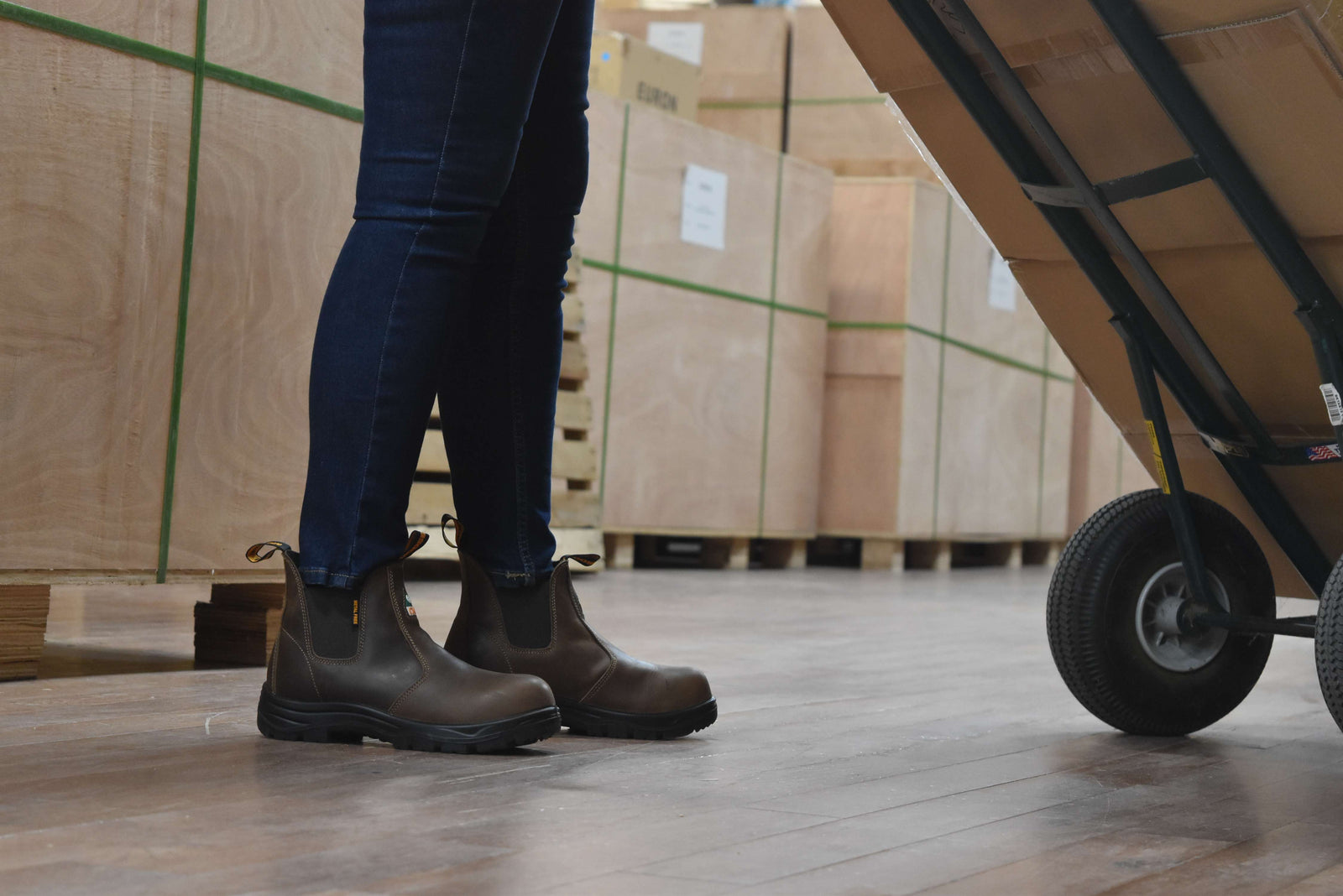
Light composite toe. Slip resistance for polished concrete. Supportive footbed for long standing. Stable midfoot for repetitive steps. Breathable upper.

Landscaping & Groundskeeping
Green triangle. Composite toe. Deep-lug traction for grass and soil. Water-resistant leather. Durable upper for tool abrasion.

Utilities & Maintenance
Composite toe. Puncture protection. Electrical hazard rating. Aggressive traction for ladders and metal platforms. Secure ankle support.

Transportation & Delivery
Light composite toe. Flexible outsole. Slip resistance for sidewalks and entrances. Breathable build. Soft cushioning for daily mileage.

Myth 1: Composite toes are weaker than steel
Composite toe caps pass the same impact and compression tests as steel. CSA and ASTM standards require equal performance across materials.
Read more
Myth 2: All Canadian jobsites require CSA
Many Canadian workplaces use CSA rules, but each site sets its own safety requirements, so safety shoe standards can differ widely.
Read more
Myth 3: Heavier boots provide more protection
Safety standards measure protection, not weight. Toe caps, plates, and outsoles pass tests regardless of mass.
Read more
Section FAQ
Questions fréquemment posées
Les bottes de travail MooseLog sont-elles approuvées CSA ?
Oui, toutes les bottes de travail MooseLog répondent aux normes CSA Z195-14, garantissant une protection contre les risques d’impact, de compression et de perforation dans les lieux de travail canadiens.
En savoir plus surGroupe CSA
Les bottes de sécurité MooseLog sont-elles adaptées aux longues journées de travail ?
Oui, nos bottes sont conçues avec des matériaux légers et des semelles intermédiaires coussinées pour offrir un confort tout au long de la journée et réduire la fatigue des pieds.
Les bottes de travail sont-elles obligatoires selon la réglementation canadienne en matière de sécurité?
Oui, dans de nombreux secteurs tels que la construction, la fabrication et l’entreposage, les bottes de travail approuvées par la CSA sont requises pour respecter les normes de sécurité au travail au Canada.
Quelle est la différence entre les bottes de sécurité et les bottes de travail ordinaires ?
Les bottes de sécurité sont un type de bottes de travail qui comprennent des caractéristiques telles qu'un embout en acier ou en composite, des semelles résistantes aux perforations et une protection contre les risques électriques, tandis que les bottes de travail ordinaires peuvent ne pas offrir une protection certifiée.
Comment choisir les bonnes bottes de travail pour mon travail ?
Le choix des bonnes bottes de travail dépend de votre environnement de travail. Recherchez des caractéristiques telles que la certification CSA ou ASTM, la résistance au glissement, l'imperméabilité, l'isolation ou l'absence de métal dans les matériaux utilisés pour les travaux aéroportuaires ou électriques.
Les bottes de travail peuvent-elles être à la fois protectrices et légères ?
Oui, les bottes de travail modernes offrent une protection complète tout en restant légères. L'embout composite et la conception sans métal de MooseLog réduisent le poids sans compromettre la sécurité.
Protégez-vous et restez à l'aise avec les chaussures de sécurité homologuées CSA à Prince Albert. Fabriquées conformément aux normes de sécurité CSA du Canada, ces chaussures sont conçues pour ceux qui travaillent dans des environnements à risque élevé comme les chantiers de construction, les entrepôts et les installations industrielles. Dotées d'embouts renforcés, de semelles antidérapantes et de matériaux résistants aux perforations, nos chaussures de sécurité homologuées CSA offrent une protection exceptionnelle contre les dangers courants en milieu de travail. Conçues pour le confort, elles sont dotées de semelles intérieures coussinées pour une tenue longue durée et une durabilité accrue. Offertes dans une variété de styles pour hommes et femmes, ces chaussures offrent l'équilibre parfait entre sécurité, confort et performance. Choisissez des chaussures de sécurité homologuées CSA à Prince Albert pour assurer la protection de vos pieds et travailler en toute confiance et confort.
Découvrez nos bottes de sécurité certifiées CSA et ASTM. Assistance en français disponible par clavardage. Livraison rapide partout au Canada et aux États-Unis.
