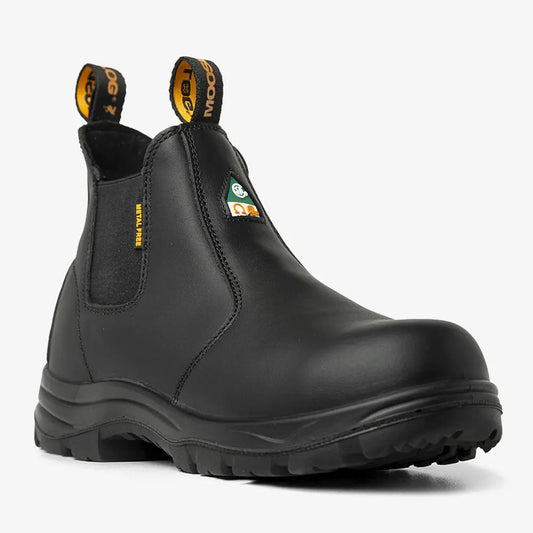
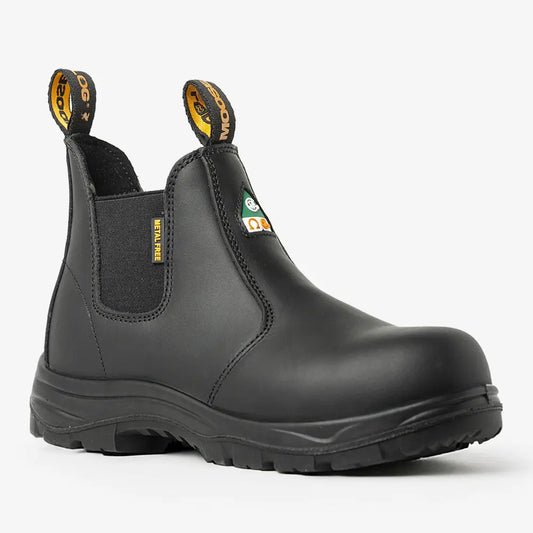
What do these mean?

STEEL TOE vs COMPOSITE TOE

Weight

Steel Toe

Heavier construction provides maximum durability and protection in extreme conditions

Composite Toe

Lightweight materials reduce fatigue during long shifts while maintaining safety standards

Metal Detectors

Steel Toe

Will trigger metal detectors at security checkpoints and sensitive work environments

Composite Toe

Non-metallic construction passes through metal detectors without issue

Temperature

Steel Toe

Conducts heat and cold, which can be uncomfortable in extreme weather conditions

Composite Toe

Insulates against temperature extremes, keeping feet comfortable in any climate

Electrical Hazard

Steel Toe

Conducts electricity and requires additional insulation for electrical hazard protection

Composite Toe

Non-conductive materials provide natural electrical hazard resistance

Safety Standards

Steel Toe

Fully CSA Approved and ASTM Compliant

Composite Toe

Fully CSA Approved and ASTM Compliant

Which Industries Use Composite?

Person in safety vest, MooseLog boots, and hard hat sitting on a wooden fence outdoors

guaranteed

All Day Comfort

All MooseLog safety boots use a composite toe with a wider toe box to reduce pressure and pinching.

Insoles and midsoles use high-rebound materials (PU) to absorb impact and return energy during repeated steps.

Air mesh lining improves airflow to manage heat and moisture.

Maximally

Lightweight Safety Boots

Composite toe and composite puncture-resistant plates replace traditional metal components.

At approximately 0.49 kg per boot, MooseLog safety boots are consistently lighter than comparable safety footwear.

Dual Certified

CSA & ASTM Approved

MooseLog safety boots surpass CSA Z195 and ASTM F2413 certification requirements.

Dual certification allows use across all regulated Canadian and United States jobsites.

Premium Quality

Full Grain Leather

We use Full-grain crazy horse leather that ages the right way. Instead of cracking or thinning, it breaks in gradually and moulds to your foot.

Leather thickness approximately 2mm.

The Daily Log

Black rubber boots worn with beige pants on a concrete surface.

Inside A Safety Boot Every Layer Explained

In-depth guide breaks down every layer inside a CSA and ASTM certified safety boot.

Read more

Lace-Up vs Slip-On Safety

How Do they Compare? Are Lace-Ups actually more supportive? When to choose Slip-On?

Read more
mother's day work boots for women

Puncture-Resistant Plates: With vs Without

Learn how CSA and ASTM PR-rated plates work, the difference between steel and composite options.

Read more

Frequently Asked Questions

What are composite toe boots?

An alternative to the traditional steel toe boot, composite toe boots use non-metal materials such as fibreglass, carbon fibre, or Kevlar to protect the toes from impact and compression. They meet the same safety standards while remaining lighter, non-conductive, and temperature neutral, making them suitable for electrical work or cold environments.

Are composite toe boots good for standing all day?

Yes. Composite toe boots reduce fatigue because they’re lighter than steel and non-conductive to heat or cold.
Weight reduction lowers strain on the legs, knees, and lower back during long shifts. When paired with a supportive insole and shock-absorbing midsole, they provide consistent comfort for workers who stand or walk for extended hours.

Vos bottes à embout composite sont-elles compatibles avec les détecteurs de métaux ?

Oui, les bottes à embout composite de MooseLog sont entièrement sans métal, ce qui les rend idéales pour les environnements avec des contrôles de sécurité stricts.

Quelle est la différence entre les bottes à embout composite et les bottes à embout en acier ?

Les bottes à embout en acier ont un embout métallique pour la protection, tandis que les bottes à embout composite sont sans métal, 30 % plus légères et ne déclenchent pas les détecteurs de métaux.