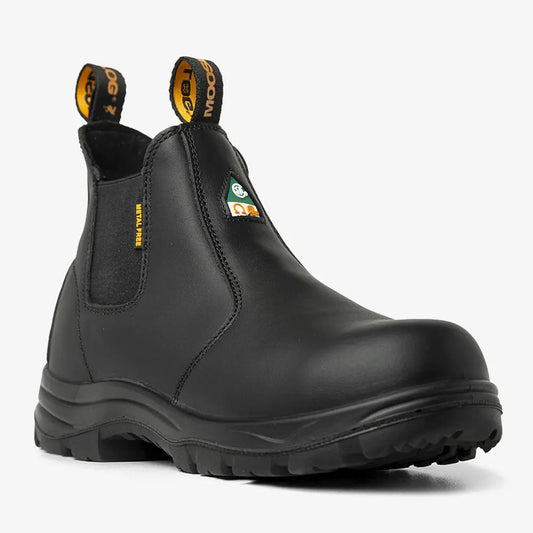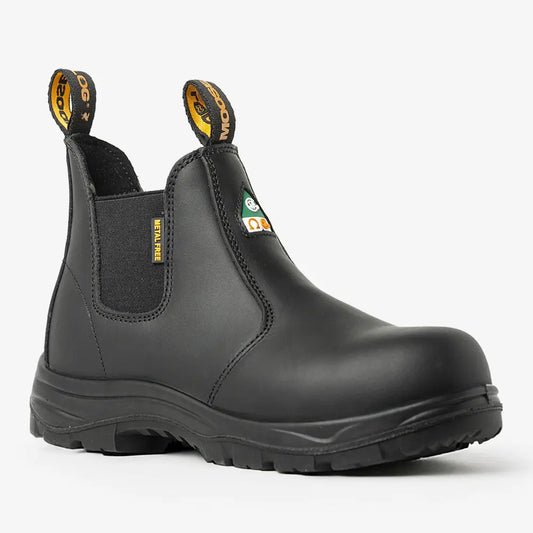


Comment choisir ses bottes de travail en magasin : un guide pratique
Se retrouver face à un mur de bottes de travail peut être déroutant. Chaque paire a l'air solide. Chaque boîte promet protection. Chaque vendeur affirme que la botte est conçue pour votre métier.
Puis, quelques semaines plus tard, les bottes semblent instables, usées ou inadaptées au travail que vous effectuez.
Ce résultat est généralement dû à un achat trop rapide.
Choisir des chaussures de travail en magasin est plus facile en prenant son temps et en utilisant une simple liste de vérification. Nul besoin d'être un expert : il suffit de savoir où regarder, quoi toucher et comment la chaussure doit réagir lorsqu'on la manipule.
Ce guide vous explique précisément ce qu'il faut vérifier en magasin. Chaque étape vous aide à éliminer les modèles de mauvaise qualité et à vous concentrer sur les bottes réellement adaptées à votre lieu de travail.
Commencez par votre environnement de travail
Avant de toucher une botte, pensez à l'endroit où vous travaillez.
Sur les chantiers, on est exposé aux clous, au béton, au gravier et aux terrains accidentés. En entrepôt, on parcourt de longues distances à pied sur des sols lisses. Les livraisons impliquent des déplacements constants, des manœuvres et des entrées et sorties rapides de véhicules. Les métiers de l'électricité nécessitent une protection contre les circuits sous tension et les surfaces conductrices.
Votre environnement détermine ce qui touche le dessous de votre botte, ce qui se trouve au niveau du sol et quelles forces s'exercent sur vos pieds tout au long de la journée.
Une fois ces conditions comprises, toutes les autres décisions deviennent plus simples. La protection des orteils, la résistance à la perforation, la conception de la semelle extérieure et la solidité des matériaux doivent être adaptées à votre quotidien.
Vérifiez d'abord l'étiquette de l'embout.
L'étiquette sur l'embout de la botte indique si elle est conforme aux normes de sécurité. Recherchez les marquages CSA Z195 ou ASTM F2413 imprimés sur la languette ou l'étiquette intérieure.
Ces normes confirment que la botte a réussi les tests en laboratoire de résistance aux chocs et à la compression. Certains marquages indiquent également une protection contre les risques électriques ou une résistance à la perforation. Vous pouvez consulter les exigences officielles directement auprès des organismes de certification, notamment l' Association canadienne de normalisation et ASTM International .
Commencez par cette étape. Si l'étiquette ne correspond pas aux exigences de votre lieu de travail, remettez la botte en place. Ne vous laissez pas séduire par le style ou le confort et n'achetez pas une botte qui ne répond pas aux besoins de protection de base.
Si vous souhaitez un aperçu pratique qui relie ces normes aux décisions d'achat, le guide d'achat de bottes de travail de MooseLog explique en détail comment les certifications sont liées aux environnements de travail réels.
Examinez attentivement le motif de la semelle extérieure.
Retournez la botte et examinez la semelle.
Les crampons profonds et espacés offrent une bonne adhérence sur la terre, la boue et le gravier. Les profils plus plats conviennent au béton et aux surfaces intérieures. Les composés de caoutchouc plus tendres assurent une meilleure adhérence sur le métal, les rampes et les sols lisses d'atelier.
Réfléchissez aux endroits où vous passez le plus clair de votre temps. Une botte conçue pour la terre est peu performante sur du béton poli. Une semelle extérieure pour entrepôt s'use rapidement sur le gravier et l'asphalte.
Appuyez votre pouce sur le caoutchouc. Une semelle extérieure très dure dure plus longtemps, mais peut glisser sur les surfaces lisses. Une semelle extérieure légèrement plus souple offre une meilleure adhérence, mais s'use plus vite en extérieur.
Il n'existe pas de bande de roulement universelle. Il n'existe que la bande de roulement adaptée à vos surfaces.
Fléchissez l'avant-pied avec vos mains
Tenez la botte par le talon et les orteils. Pliez l'avant de la botte à l'endroit où votre pied se fléchit naturellement.
Une flexibilité ferme mais maîtrisée facilite le travail sur échelle, l'escalade et le port de charges. Une flexibilité modérée convient aux déplacements en entrepôt et aux interventions de service. Une rigidité excessive limite les mouvements et entraîne de la fatigue lors de longues journées de travail.
Si la botte se plie facilement en deux, elle manque de structure. Si elle se plie à peine, elle risque de gêner le mouvement du pied au lieu de le soutenir.
L'avant-pied doit offrir une résistance à la pression des mains sans pour autant paraître rigide.
Appuyez sur le contrefort du talon
Le contrefort est la zone structurée à l'arrière de la botte. Appuyez fermement dessus avec votre pouce.
Un contrefort de talon robuste maintient le pied centré lors des virages, des portés et sur terrain accidenté. Il réduit les mouvements latéraux et favorise l'alignement de la cheville.
Si le talon s'affaisse facilement, la botte semblera instable une fois faite à votre pied. Cette instabilité se manifeste souvent par des douleurs à la cheville ou une usure irrégulière de la semelle extérieure.
Les bonnes bottes conservent leur forme même sous pression.
Retirez et vérifiez la semelle intérieure
Si le magasin le permet, retirez la semelle intérieure.
Recherchez un soutien plantaire stable et un amorti uniforme du talon à l'avant-pied. Appuyez avec votre pouce. Si la semelle intérieure s'affaisse, elle perdra rapidement son soutien après quelques utilisations.
Une semelle intérieure de qualité doit reprendre sa forme initiale après relâchement et offrir une sensation uniforme sur toute sa surface. Cela reste important même si vous prévoyez de remplacer les semelles ultérieurement. Le soutien de la base influe toujours sur la façon dont la botte répartit le poids.
Faites un petit tour dans le magasin
Prenez le temps de marcher. Ne restez pas immobile à prendre une décision.
Si possible, faites 20 à 30 pas sur différentes surfaces. Portez une attention particulière à l'attaque du talon, à la pression de l'avant-pied et à la stabilité latérale.
De bonnes chaussures offrent une stabilité immédiate. Le pied doit être bien maintenu, sans risque de protrusion vers l'intérieur ou l'extérieur. La chaussure doit accompagner le mouvement du pied au lieu de lui résister.
Un inconfort initial se transforme souvent en problèmes plus importants par la suite.
Vérifiez la structure du cuir
Tenez la botte au niveau de la cheville et du milieu du pied. Pressez doucement le cuir.
Le cuir structuré conserve sa forme et résiste à l'affaissement. Il supporte mieux la flexion, la position à genoux et le contact avec les outils au fil du temps. Le cuir souple peut sembler confortable en magasin, mais il perd plus rapidement son soutien lors d'un travail exigeant.
Examinez les coutures autour des points de flexion. Des coutures renforcées réduisent les contraintes là où la botte se plie le plus. Des coutures lâches ou irrégulières indiquent une fabrication bâclée.
Des matériaux résistants protègent la forme de la botte longtemps après la période de rodage.
Considérez le démarrage comme un système
À ce stade, prenez du recul et considérez la botte dans son ensemble.
Le pare-pierres protège les zones d'impact. La semelle extérieure assure une bonne adhérence au sol. La semelle intermédiaire absorbe les chocs. La tige maintient le pied stable. Chaque élément soutient les autres.
Si un point faible se fait sentir, c'est toute la chaussure qui en pâtit. Une construction solide offre un équilibre parfait entre les mains et aux pieds.
Si vous souhaitez approfondir la manière dont chaque composant contribue à la protection et à la durabilité, comprendre les principales caractéristiques des bottes de sécurité et leur fonction permet de faire le lien entre les différents éléments.
Lisez l'étiquette au-delà de la taille
Vérifiez le lieu de fabrication de la botte, les matériaux utilisés et la description des caractéristiques de sécurité.
Un langage clair et précis est gage de transparence. Les termes vagues masquent généralement des compromis.
Les bottes conçues pour un usage intensif ont tendance à être directes quant à ce qu'elles offrent.
Prenez votre temps avant d'acheter
Choisir vite ne rapporte rien.
La plupart des acheteurs regrettent les bottes achetées sur un coup de tête. Prendre dix minutes de plus en magasin permet d'éviter des mois d'inconfort et un remplacement prématuré.
La bonne botte est un choix réfléchi. Elle correspond à votre métier, soutient vos mouvements et conserve sa structure à l'épreuve du temps.
Réflexions finales
L'achat de chaussures de travail en magasin ne nécessite aucune incertitude. Vous connaissez déjà les exigences de votre métier. Cette liste de vérification vous aide à confirmer si la chaussure répond à ces exigences.
En vérifiant les étiquettes, les matériaux, la structure et le mouvement, vous éliminez rapidement les modèles de mauvaise qualité. Vous repartez avec des bottes adaptées à votre travail, au lieu d'avoir l'impression que votre travail doit s'adapter aux bottes.
Cette confiance commence avant même d'arriver à la caisse.