

Quel est le meilleur choix : une protection en carbone ou une protection composite ?
Lors de l'achat de chaussures de sécurité, la protection des orteils est primordiale. Les deux options sans métal les plus courantes sont les embouts composites et les embouts en carbone. Tous deux répondent aux normes de sécurité actuelles et évitent les inconvénients de l'acier. De nombreux travailleurs les considèrent à tort comme appartenant à deux catégories distinctes. Ce n'est pas le cas.
L'embout en carbone est un type d'embout composite. La différence réside dans les matériaux, la construction, les performances et le coût. Ce guide explique le fonctionnement de chaque type d'embout, ses applications optimales et comment choisir en fonction de votre travail et de votre environnement.
Qu'est-ce qu'un orteil composite ?
Définition et matériaux
Un embout composite est un embout de sécurité non métallique fabriqué à partir de matériaux techniques. Les matériaux courants comprennent la fibre de verre, le Kevlar, les polymères plastiques et les mélanges de fibres de carbone. Les fabricants choisissent différentes combinaisons pour répondre aux exigences en matière d'impact et de compression tout en minimisant le poids.
normes de sécurité
Les embouts composites sont certifiés conformes aux normes ASTM F2413 et CSA Z195 lorsqu'ils sont correctement testés. Ces normes exigent une protection contre un impact de 75 livres-pieds et une compression de 2 500 livres. La certification repose sur les résultats des tests, et non sur la dénomination du matériau.
Pourquoi les orteils composites sont devenus populaires
Les embouts composites ont gagné en popularité à mesure que les chantiers abandonnaient l'acier. Les travailleurs souhaitaient des chaussures plus légères, une meilleure isolation par temps froid et des options sans métal pour les environnements à sécurité renforcée.
Qu'est-ce qu'une protection d'orteil en carbone ?
Explication du syndrome des orteils en carbone
Un embout de sécurité en carbone utilise la fibre de carbone comme principal matériau de renforcement. La fibre de carbone est extrêmement résistante pour son poids et ne se déforme pas sous la charge. Dans les chaussures de sécurité, les embouts en carbone sont moulés dans des coques rigides qui dispersent efficacement l'énergie d'impact.
L'embout en carbone est une catégorie composite
L'embout en carbone n'est pas distinct de l'embout composite ; il fait partie de la famille des composites. Tous les embouts en carbone sont des embouts composites, mais l'inverse n'est pas vrai. Le terme « embout en carbone » désigne généralement des matériaux de qualité supérieure et des tolérances de fabrication plus strictes.
différences de poids et de fatigue
impact réel du poids
La fibre de carbone possède un rapport résistance/poids exceptionnel. De ce fait, les embouts de protection en carbone sont souvent légèrement plus légers que les embouts traditionnels en fibre de verre ou en composite polymère. La différence par chaussure peut paraître minime, mais sur une journée de travail complète, elle réduit la fatigue des jambes.
Quand le poids compte le plus
Le poids des chaussures devient un facteur important dans les métiers impliquant de longs déplacements à pied, l'utilisation d'échelles ou de longues périodes en position debout. Les secteurs de l'entreposage, de la logistique, des services publics et de l'inspection sont ceux qui tirent le plus grand bénéfice de chaussures de sécurité plus légères.
résistance et durabilité
Performances en matière d'impact et de compression
Les embouts de protection en carbone et en composite réussissent les mêmes tests de sécurité lors de leur certification. La fibre de carbone offre une excellente résistance aux fissures et aux déformations permanentes. Les embouts composites standard présentent une plus grande variabilité selon la qualité des matériaux et la conception.
Cohérence au fil du temps
La fibre de carbone conserve son intégrité structurelle sous des cycles de contraintes répétés. Les matériaux composites de moindre qualité peuvent présenter des microfissures après des années d'utilisation intensive. Cette différence est cruciale dans les environnements industriels exigeants.
propriétés thermiques et électriques
Isolation thermique et contre le froid
Les embouts en carbone et en composite offrent une meilleure isolation que l'acier. Ils empêchent le froid de pénétrer dans la botte en hiver. La fibre de carbone est particulièrement performante en matière de stabilité thermique, un atout précieux sous le climat canadien.
Compatibilité avec les risques électriques
Les embouts sans métal permettent aux chaussures de sécurité électrique d'être conformes aux normes, à condition d'être associés à une semelle extérieure et une construction appropriées. La certification repose sur des tests complets de la botte, et non uniquement sur le matériau de l'embout.
Contrôle de sécurité et détection de métaux
Avantages de l'absence de métal
Les embouts en carbone et en composite ne contiennent pas de métal. Cela facilite le passage aux portiques de sécurité dans les aéroports, les tribunaux, les usines et les bâtiments gouvernementaux.
Conformité au travail
De nombreux chantiers exigent désormais des chaussures sans métal. Les embouts en carbone et en composite répondent à ces exigences une fois certifiés.
Différences de coûts
Pourquoi les orteils en carbone coûtent plus cher
La fibre de carbone est coûteuse à extraire et à transformer. L'outillage, la précision du moulage et la maîtrise des déchets de matériaux augmentent les coûts de fabrication. Ces facteurs font grimper les prix de vente au détail.
décision fondée sur la valeur
Les embouts composites offrent une excellente protection à un prix plus abordable. Les embouts en carbone justifient leur coût dans les situations où le poids, la durabilité et la performance à long terme priment sur les économies immédiates.
Lequel choisir ?
| Fonctionnalité | embout en acier | Orteil composite | Embout en fibre de carbone |
| Matériel | Acier massif | Fibre de verre, plastique, Kevlar | Fibre de carbone / Nanotubes |
| Poids | le plus lourd | Léger (environ 30 % < Acier) | Le plus léger (environ 40 à 50 % < Acier) |
| Profil/En vrac | Mince et discret | Volumineux / Épais | Mince et élégant |
| Isolation | Conduit le froid/la chaleur | Excellente isolation | Isolation supérieure |
| Sécurité | Déclenche les détecteurs de métaux | Sans métal | Sans métal |
| Durabilité | Déformations/bosses à l'impact | Peut se fissurer sous un impact violent | Haute résilience / Rigide |
| Coût relatif | $ (Abordable) | $$(Moyen de gamme) | $$$ (Premium) |
Choisissez une protection d'orteil composite si
- Le rapport qualité-prix est votre priorité : vous recherchez la solution la plus économique pour obtenir une botte sans métal, certifiée CSA/ASTM.
- Vous souhaitez plus de choix : la plupart des marques de sécurité proposent une plus grande variété de modèles en composite standard qu’en carbone.
Choisissez une coque en carbone si
- Le poids est votre priorité : vous êtes prêt à payer un prix plus élevé précisément pour réduire le poids de la botte de quelques grammes.
- Le prix n'est pas un facteur : vous êtes prêt à payer un supplément pour un type de matériau spécifique (fibre de carbone) plutôt que pour une meilleure note de sécurité, car les deux sont évaluées de manière identique.
Où les trouver ?
chaussures de sécurité à embout composite

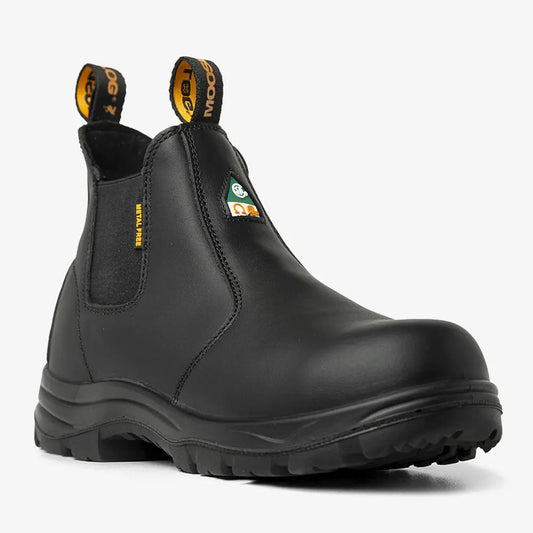
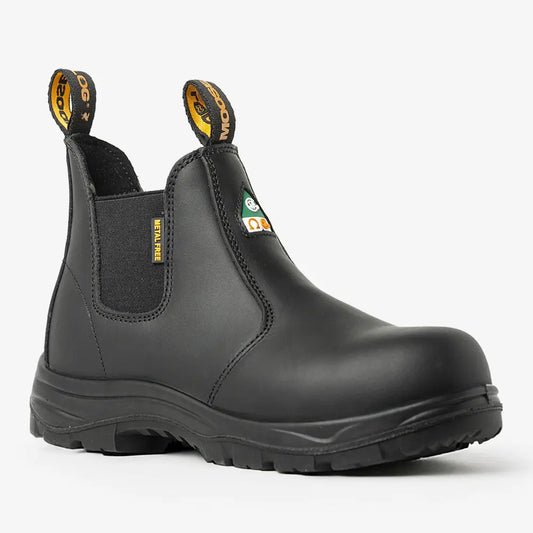
Les bottes à embout composite sont largement disponibles chez la plupart des marques de chaussures de sécurité. MooseLog se spécialise exclusivement dans les chaussures de sécurité à embout composite sans métal . Toutes les bottes MooseLog sont testées en laboratoire et conformes aux normes CSA Z195 et ASTM F2413. Elles sont conçues pour les travailleurs qui ont besoin d'une protection certifiée sans le poids et les inconvénients liés au transfert de chaleur de l'acier.
La protection composite pour les orteils reste le meilleur choix pour la plupart des travailleurs en raison de sa disponibilité, de sa gamme de prix et de ses performances éprouvées dans tous les secteurs d'activité.
Chaussures de sécurité à embout en carbone
Les bottes à embout carbone sont plus spécialisées et généralement positionnées comme des produits haut de gamme. Peu de fabricants proposent des embouts en véritable fibre de carbone en raison des coûts plus élevés des matériaux et de la production. Ces bottes se trouvent le plus souvent dans les gammes de sécurité haut de gamme ou les collections de chaussures de travail techniques.
Les chaussures de sécurité à embout en carbone sont généralement destinées aux travailleurs qui privilégient la légèreté, la finesse et la durabilité. Leur disponibilité est plus limitée et leur prix reflète davantage les matériaux de pointe utilisés que la qualité de la sécurité.
Les travailleurs intéressés par les bottes à embout en carbone doivent s'attendre à moins de choix de modèles et à des coûts plus élevés que pour les chaussures à embout composite standard.
Conclusion
Les chaussures de sécurité à embout carbone et à embout composite sont toutes deux sans métal et conçues pour répondre aux mêmes normes de certification. Aucune n'offre un niveau de sécurité supérieur à l'autre. La différence réside dans le choix des matériaux, leur disponibilité et leur coût, et non dans le niveau de protection.
Lors du choix de chaussures de sécurité, privilégiez la certification, le confort, la performance de la semelle extérieure et l'adéquation de la chaussure à votre environnement de travail. Une chaussure de qualité, certifiée, sera toujours plus importante que le nom du matériau imprimé sur l'embout.
Si vous hésitez encore entre plusieurs facteurs comme le type d'embout, l'adhérence de la semelle extérieure, les exigences de votre poste ou les normes de certification, il est utile de prendre du recul et d'avoir une vision d'ensemble. Notre guide d'achat de chaussures de sécurité 2026 détaille tous les éléments à prendre en compte avant de choisir vos chaussures de sécurité.
FAQ
Les orteils en carbone sont-ils plus résistants que les orteils composites ?
Les embouts en carbone utilisent de la fibre de carbone, ce qui leur confère une résistance plus homogène. Les deux types d'embouts répondent aux mêmes normes de sécurité une fois certifiés.
Un embout en carbone est-il plus léger qu'un embout composite ?
Les embouts en carbone sont généralement plus légers grâce au rapport résistance/poids de la fibre de carbone.
Les embouts en carbone sont-ils conformes aux normes CSA et ASTM ?
Oui, lorsqu'elle est correctement testée dans le cadre d'une chaussure de sécurité certifiée.
Les chaussures à semelles carbone sont-elles plus chaudes en hiver ?
La fibre de carbone isole bien et ne transmet pas le froid comme le métal.
Les orteils composites déclenchent-ils les détecteurs de métaux ?
Non. Les orteils composites ne contiennent pas de métal.
La protection des orteils en carbone justifie-t-elle son prix plus élevé ?
Cela vaut le coup pour les travailleurs qui privilégient le poids le plus bas possible, tout en conservant la durabilité.