

Pourquoi la plupart des bottes de travail sont-elles lourdes et que faut-il privilégier ?
Les lourdes bottes de travail sont une source de plainte fréquente dans les secteurs de la construction, de l'entreposage, des services publics et de l'inspection. Après une longue journée de travail, leur poids se traduit par des jambes fatiguées, des mouvements ralentis et une fatigue persistante. Beaucoup pensent que c'est inévitable, car les normes de sécurité imposent l'utilisation de matériaux lourds.
Cette hypothèse est incorrecte.
Le poids des bottes est influencé par des choix de conception effectués bien avant les tests de certification. Comprendre l'origine de ce poids permet d'évaluer plus facilement des options plus sûres et plus légères, sans compromettre la conformité ni les exigences du chantier.
Le poids est un choix de conception
Ce sont les normes de sécurité qui évaluent les performances, et non l'encombrement. La résistance aux chocs, à la compression, à la perforation et aux risques électriques est mesurée par des tests. Le poids en lui-même n'est pas un critère.
Des organisations telles que le groupe CSA L' ASTM International certifie les chaussures en fonction de leurs performances dans des conditions contrôlées. Une botte peut répondre à ces normes grâce à l'utilisation de matériaux modernes et légers ou de composants plus anciens et plus lourds. Les deux peuvent être certifiées. La différence réside dans les priorités d'ingénierie.
Les bottes plus lourdes reflètent généralement des méthodes de fabrication traditionnelles plutôt qu'une protection accrue.
D'où provient réellement le poids des bottes ?

Le poids d'une chaussure de travail provient principalement d'un petit nombre de composants.
Protection des orteils
Les embouts en acier ajoutent un poids considérable à l'avant de la chaussure. Ce positionnement est important : le poids concentré sur les orteils augmente la dépense énergétique à chaque pas, car cet élément est plus éloigné de la cheville. Les embouts composites offrent les mêmes performances en matière d'impact et de compression, tout en étant plus légers et avec une répartition plus homogène du poids.
Protection anti-perforation
Les plaques anti-perforation en acier s'étendent sur toute la longueur de la semelle et ajoutent une masse rigide sous le pied. Les plaques anti-perforation composites répondent aux exigences de certification tout en permettant une flexion contrôlée et un poids réduit. Cette différence devient perceptible lors de longues journées de travail et de marches fréquentes.
Composés de semelle extérieure
Les semelles extérieures en caoutchouc dense augmentent la durabilité, mais aussi le poids. Les modèles plus anciens privilégient l'épaisseur à l'efficacité des matériaux. Les composés antidérapants modernes offrent adhérence et résistance à l'abrasion tout en étant plus légers.
construction en couches
L'accumulation de plusieurs couches de rembourrage, de renforts et de superpositions augmente la masse sans pour autant améliorer systématiquement les performances. De nombreuses bottes lourdes intègrent des matériaux superflus ajoutés au fil du temps plutôt que d'être conçues dès le départ.
Quincaillerie métallique
Les tiges en acier, les œillets et autres éléments de quincaillerie ajoutent du poids. Pris individuellement, ces éléments semblent insignifiants. Ensemble, ils représentent un poids conséquent pour la botte entière.
Comment le poids affecte le corps au cours d'un quart de travail
Le poids des bottes accentue la fatigue. Chaque pas exige un effort supplémentaire pour soulever et déplacer des chaussures plus lourdes. Sur des milliers de pas, cet effort se répercute sur les chevilles, les genoux, les hanches et le bas du dos.
Des bottes plus lourdes réduisent également la réactivité. Sur les échelles, les terrains accidentés et les escaliers, le poids supplémentaire affecte l'équilibre et la précision des mouvements. Cela a des conséquences sur la sécurité, la productivité et le confort en fin de poste.
Le poids influence le confort ressenti dans une botte après dix heures d'utilisation, et non après une seule.
Le respect des normes de sécurité n'exige pas de bottes lourdes.
Une botte plus légère n'implique pas une protection réduite. Les tests de certification évaluent les résultats. Si une botte atteint les seuils requis, elle est certifiée.
Les embouts de protection composites, les plaques anti-perforation composites et les composés techniques des semelles extérieures sont largement utilisés dans les chaussures certifiées. Ces matériaux répondent aux exigences des normes CSA et ASTM tout en réduisant le poids superflu.
La réduction du poids témoigne d'une meilleure science des matériaux et d'une ingénierie plus ciblée.
Critères de choix d'une botte de travail légère

Évaluer le poids nécessite d'aller au-delà du discours marketing.
construction composite des orteils
Les embouts composites réduisent le poids à l'avant et empêchent la transmission du froid en hiver. Ils sont sans métal et largement utilisés sur les chantiers canadiens.
Protection anti-crevaison conçue
Les semelles composites modernes protègent des obstacles sous le pied tout en permettant un mouvement naturel. Cela améliore le confort de marche et réduit la fatigue.
Conception efficace de la semelle extérieure
L'adhérence et la durabilité sont essentielles. Privilégiez les semelles extérieures conçues pour une bonne traction sans être trop épaisses.
Construction supérieure simplifiée
Un renfort ciblé est plus performant qu'un rembourrage multicouche. La conception épurée de la tige réduit le poids et améliore la flexibilité.
Poids de la botte publié
Les marques qui privilégient la légèreté indiquent souvent le poids de chaque botte. Il s'agit d'une spécification mesurable qui permet de comparer objectivement les différentes options.
Qui tire le plus grand profit de bottes de travail plus légères ?

Le poids compte pour tous les rôles, même si son impact varie.
Les ingénieurs, les chefs de projet et les inspecteurs portent souvent des bottes de travail lors des visites de chantier plutôt que pendant un travail continu. Parcourir de vastes sites, monter des escaliers et rester debout pendant les inspections sollicite fortement les chaussures.
Les ouvriers du bâtiment et les magasiniers ressentent davantage cet effet en raison de leurs mouvements constants. À terme, la réduction du poids des bottes favorise un rythme de travail régulier et diminue la fatigue en fin de poste.
Dans les deux cas, des chaussures plus légères améliorent les performances sans compromettre le confort.
Des fonctionnalités qui alourdissent le problème sans le résoudre.
Certaines fonctionnalités augmentent le volume sans apporter de valeur ajoutée à long terme.
- Rembourrage excessif qui se comprime rapidement
- Semelles intermédiaires épaisses sans retour d'énergie
- superpositions décoratives et coutures
- Des tiges trop rigides qui limitent les mouvements
Ces éléments paraissent souvent rassurants sur une étagère, mais contribuent peu à leur confort au quotidien.
Comment évaluer une botte avant de l'acheter

Avant de vous engager avec une paire, vérifiez les points suivants :
- Marquages de certification CSA et ASTM
- type de matériau de l'orteil
- type de protection anti-perforation
- Indice de résistance au glissement
- Poids par botte lorsque disponible
Si vous souhaitez un cadre plus large pour évaluer les chaussures de sécurité sur différents chantiers et dans différentes conditions, notre guide d'achat de bottes de travail 2026 détaille les facteurs clés.
Réflexions finales
Lorsque le poids est considéré comme un facteur de performance, les bottes favorisent la mobilité, l'efficacité et un confort durable. Comprendre l'origine du poids vous aide à choisir des chaussures qui facilitent votre travail au lieu de le compliquer.
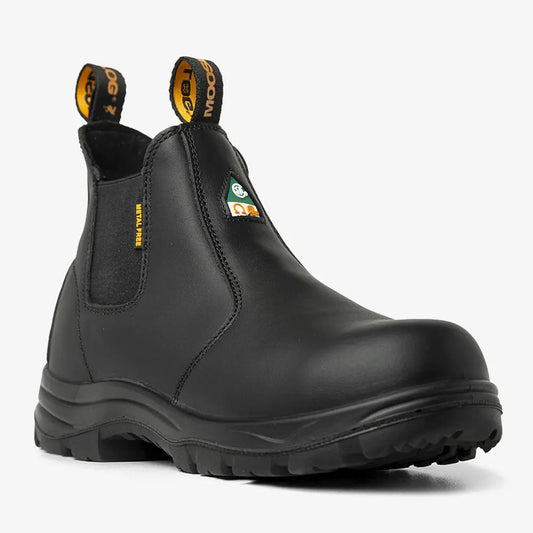
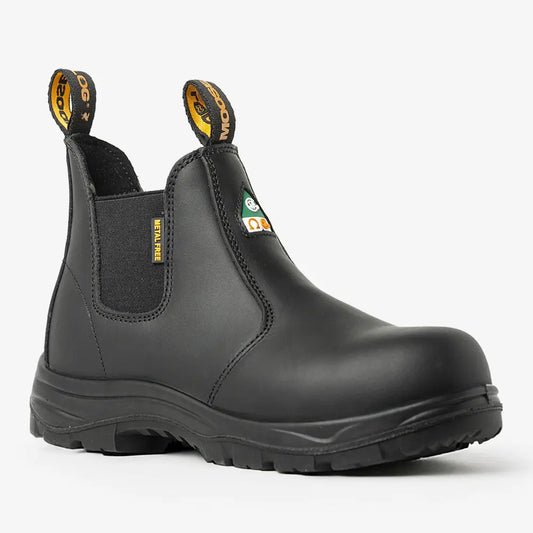
Pour voir comment ces principes sont appliqués à un produit concret, jetez un œil à la botte de travail Timber de MooseLog . Elle est conçue autour d'une protection composite certifiée et d'une utilisation optimale des matériaux, la légèreté étant une priorité.