

Orteil en alliage vs orteil composite : les avantages, les inconvénients et la solution
Lorsqu'on achète des bottes de sécurité, l'embout de protection est l'un des premiers éléments auxquels on pense. La sécurité est primordiale. Le confort est essentiel. On veut une botte performante pour le travail. Les modèles en alliage et en composite sont les deux options les plus courantes aujourd'hui. Tous deux répondent aux mêmes exigences en matière d'impact et de compression selon les normes ASTM F2413-24 et CSA Z195-14 . Tous deux réussissent les tests en laboratoire et offrent une protection optimale sur les chantiers. La différence se fait sentir au niveau du confort et de la performance lors de longues journées de travail.
Ce guide simplifie les choses. Vous découvrirez les points forts et les points faibles de chaque type d'embout de protection, ainsi que les difficultés rencontrées par les travailleurs lorsqu'il s'agit de choisir entre les deux.
Qu'est-ce qu'un orteil en alliage
Une coque de protection en alliage utilise un mélange de métaux légers. La plupart des fabricants utilisent de l'aluminium, du titane ou un mélange des deux. La coque est fine et résistante. Elle offre une protection efficace contre les chocs et un profil plus fin pour les orteils. Certains travailleurs apprécient la sensation familière du métal et la confiance qu'inspire le port d'un matériau traditionnel.
Là où la protection en alliage est performante
- Bonne résistance et durabilité
- Forme des orteils plus fine
- Excellentes performances lors des tests en laboratoire
- Cela semble familier à quiconque est habitué à l'acier
Là où les orteils en alliage rencontrent des difficultés
- Transfère le froid en hiver et la chaleur en été
- Plus lourd que les matériaux composites sur de longues heures d'utilisation
- Déclenche les détecteurs de métaux
- Peut ressentir une raideur à l'avant-pied lors de longues périodes de travail.
Les bottes à embout métallique conduisent souvent le froid et la chaleur, ce qui peut rendre les pieds inconfortables lors de longues journées de travail ou par temps froid. Pour de nombreux travailleurs, notamment ceux qui passent de longues heures sur du béton ou qui travaillent à l'extérieur par temps froid, cet inconfort est l'une des raisons pour lesquelles ils optent pour des bottes à embout composite.
Qu'est-ce qu'un orteil composite ?
Un embout composite utilise des matériaux non métalliques. La plupart des embouts sont fabriqués en fibre de verre, en Kevlar, en fibre de carbone ou en mélanges de ces matériaux. Sa structure est à la fois robuste et légère. Un embout composite répond aux mêmes normes de sécurité qu'un embout en alliage, sans les inconvénients liés aux chocs thermiques ou au poids supplémentaire.
Là où la protection composite des orteils est performante
- léger
- Aucun transfert de température
- Aucun problème avec le détecteur de métaux
- Confortable pour les longues journées
- Idéal pour les travaux intérieurs et extérieurs
Quand la protection composite des orteils présente des limites
- Forme légèrement plus volumineuse dans certaines bottes
- L'espace peut paraître plus grand si vous préférez un espace très réduit pour les orteils.
De nombreux lieux de travail industriels adoptent désormais les chaussures à embout composite, car elles réduisent le poids et limitent les transferts de température. Le NIOSH confirme que des chaussures plus légères et isolantes contribuent à réduire la fatigue sur les surfaces dures lors de longues journées de travail.
Embout en alliage vs embout composite : Comparaison simple
| Fonctionnalité | embout en alliage | Orteil composite |
|---|---|---|
| Poids | Moyen à lourd | Lumière |
| Température | Il devient froid ou chaud | Reste neutre |
| détecteurs de métaux | Les fait réagir | Aucune détection |
| Confort | Idéal pour les courtes durées d'utilisation | Meilleure tenue pendant les longues périodes de travail |
| Sécurité CSA/ASTM | laissez-passer | laissez-passer |
Les deux respectent les mêmes normes de sécurité. La différence se fait davantage sentir lorsqu'on passe de longues heures sur du béton ou qu'on alterne entre zones froides et chaudes au cours de la journée.
Le bien
embout en alliage
Bonne résistance et performances fiables. Forme mince. Semble robuste. Convient parfaitement aux travaux où la température n'est pas un facteur important.
Orteil composite
Légères, faciles à porter et idéales pour les longues journées. Aucun choc thermique en hiver. Confortables pour les travailleurs qui marchent, grimpent ou portent des charges lourdes toute la journée. Parfaites pour quiconque recherche une botte moderne offrant une protection optimale.
Le Mauvais
embout en alliage
Le poids des appareils électroménagers se fait sentir lors des longues journées de travail. Les matins froids sont éprouvants. Les journées chaudes retiennent la chaleur. La détection de métaux ralentit le travail sur certains sites.
Orteil composite
Certaines bottes paraissent un peu plus volumineuses au niveau des orteils. Les travailleurs qui préfèrent des bottes très fines remarquent parfois cette différence de forme. C'est le seul inconvénient récurrent.
Le problème
La plupart des travailleurs choisissent leurs chaussures de sécurité en fonction de leurs habitudes, sans tenir compte de leurs nouvelles exigences professionnelles. L'acier leur paraît familier, l'alliage plus léger, mais les exigences du travail ont évolué. Les équipes se déplacent sur des chantiers variés. Les horaires sont plus longs. De nombreux métiers impliquent de marcher, de grimper et de rester debout sur du béton en permanence. Le poids, la stabilité thermique et le maintien d'un bon soutien tout au long de la journée sont essentiels.
Parmi les plaintes des travailleurs, la fatigue arrive en tête. Les embouts de protection plus lourds et plus froids ralentissent le démarrage du poste et augmentent la fatigue en fin de journée. Les modèles en alliage résolvent partiellement le problème en réduisant le poids, mais ils restent conducteurs de froid et déclenchent les détecteurs de métaux. Les modèles composites vont plus loin. Ils sont entièrement dépourvus de métal, ce qui réduit encore le poids, assure une bonne stabilité en milieu froid et répond aux mêmes exigences ASTM en matière de résistance aux chocs et à la compression.
C'est un point souvent négligé. Acier, alliage et composite offrent tous le même niveau de sécurité. La différence réside dans le confort ressenti après dix heures d'activité. La coque composite est la plus adaptée au rythme et aux conditions variées des chantiers modernes.
Pour une analyse plus détaillée des embouts de protection en acier, en alliage et en composite, consultez notre guide comparatif complet ici.
La solution
Si vos quarts de travail durent de huit à dix heures
Si vous vous tenez sur du béton
Si vous travaillez à l'extérieur en hiver
Si vous marchez des milliers de pas par jour
Si vous vous déplacez entre des zones froides et chaudes
Si vous souhaitez une botte plus légère sans compromettre la protection
La protection composite en bout de coque est généralement le meilleur choix. Elle permet de gérer des conditions variées sans risque de choc thermique ni de poids supplémentaire, et c'est précisément pourquoi…
Pourquoi de nombreux travailleurs choisissent désormais les orteils composites
Ces cinq dernières années, de plus en plus de travailleurs ont opté pour des chaussures à embout composite. Les matériaux légers se sont améliorés. Les semelles extérieures sont plus flexibles. Les habitudes de travail ont évolué. Les exigences en matière de confort sont plus élevées. Les travailleurs recherchent des bottes qui restent légères et stables toute la journée.
L'embout composite est parfaitement adapté aux réalités du travail actuel. Il permet de rester actif toute la journée sans engendrer la fatigue liée au port de bottes plus lourdes.
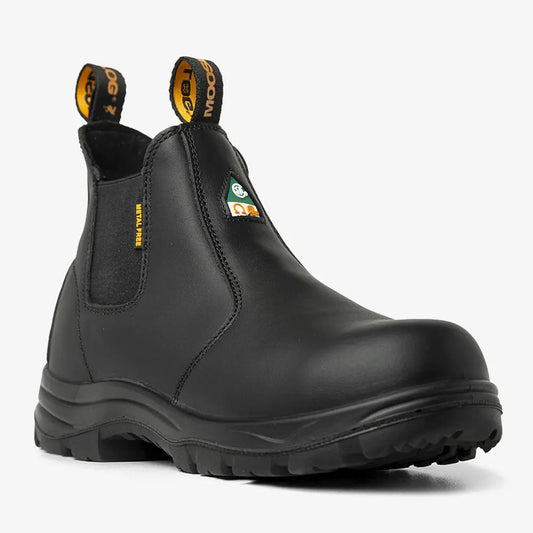
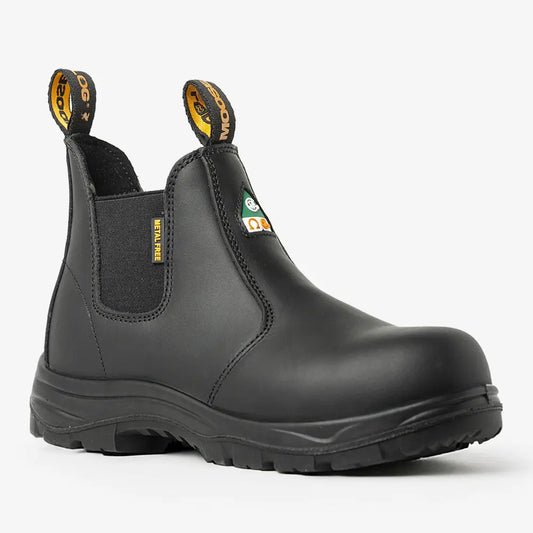
Bottes à embout composite MooseLog
Les bottes MooseLog Timber sont dotées d'un embout composite conforme aux normes ASTM F2413 et CSA Z195. Cet embout reste léger et protège des chocs thermiques. Vous bénéficiez d'une stabilité optimale même lors de longues journées de travail. La semelle injectée directement offre une grande flexibilité. La semelle intérieure en polyuréthane absorbe les chocs sur les surfaces dures. Le cuir s'assouplit rapidement.
Si vous recherchez des bottes de sécurité confortables même après de longues journées, la gamme Timber offre cet équilibre.
Achetez des chaussures MooseLog Timber Composite Toe
FAQ
Une protection d'embout en alliage est-elle plus résistante qu'une protection d'embout en composite ?
Non, les deux types d'embouts de protection sont conçus pour offrir le même niveau de protection. Ils doivent tous deux satisfaire aux exigences rigoureuses en matière d'impact et de compression définies par des normes telles que l'ASTM F2413 et la CSA Z195 pour être certifiés comme chaussures de sécurité.
Les orteils composites sont-ils détectables par les détecteurs de métaux ?
Oui, les chaussures de sécurité à embout composite passent les détecteurs de métaux sans les déclencher. Fabriquées à partir de matériaux non métalliques comme la fibre de verre ou la fibre de carbone, elles sont idéales pour les travailleurs qui passent fréquemment les contrôles de sécurité.
Les embouts en alliage sont-ils adaptés à l'hiver ?
Ce système est efficace et offre la protection nécessaire, mais le métal transmet facilement le froid. Les travailleurs exposés à des climats très froids privilégient souvent les embouts composites, car le matériau isolant et non métallique contribue à garder les pieds au chaud en début de journée.
Est-ce que la prothèse composite se fissure ?
L'embout composite a subi de nombreux tests de durabilité en laboratoire certifié. Il répond aux mêmes normes de sécurité structurelle que l'alliage et est conçu pour résister à des forces importantes sans se fissurer.
Un embout en alliage est-il plus léger qu'un embout en acier ?
Oui, les alliages comme l'aluminium et le titane sont nettement plus légers que les embouts de protection en acier traditionnels. Cependant, un alliage reste sensiblement plus lourd qu'un embout composite, ce qui fait de ce dernier l'option la plus légère.