


Explorar Calzado de seguridad aprobado por la CSA en Prince Albert
-
Botas de seguridad Chelsea con puntera compuesta ASTM y CSA para hombre - Estilo 5666
Precio habitual $169.99 CADPrecio habitual Precio de oferta $169.99 CADPrecio unitario por -
Botas de seguridad Chelsea con puntera compuesta ASTM y CSA para mujer - Estilo 666
Precio habitual $169.99 CADPrecio habitual Precio de oferta $169.99 CADPrecio unitario por
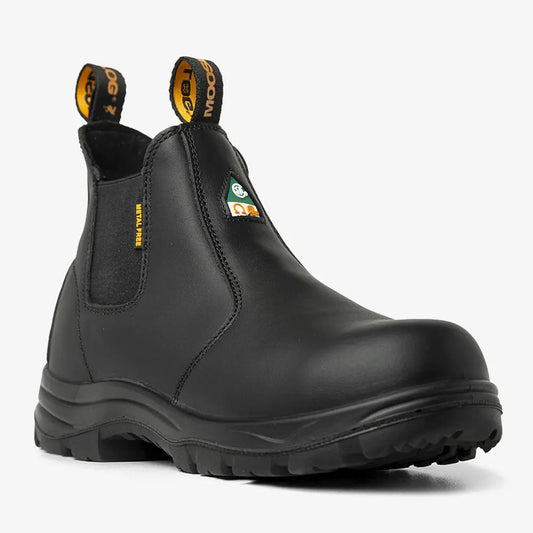
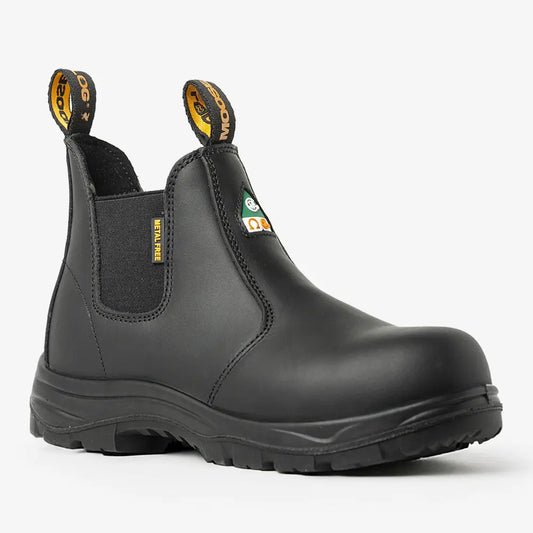


El triángulo verde en las botas de seguridad CSA significa que cuentan con puntera de Grado 1 y suela resistente a perforaciones. Es obligatorio para trabajos con objetos pesados o escombros afilados, como en construcción o almacenamiento. La CSA utiliza esta marca para demostrar que las botas de seguridad cumplen con las normas de seguridad clave de protección contra impactos y pisadas.

Green Triangle
The green triangle marks safety footwear with a Grade 1 protective toe cap and a puncture-resistant sole. It meets the highest CSA Z195 impact rating and includes a plate that helps stop sharp objects from entering through the bottom of the boot. Jobs with heavy materials, sharp debris, or active warehouse movement rely on this symbol.

White Rectangle & Orange Omega
The white rectangle with the orange Omega symbol identifies footwear with electrical shock resistance. It passes CSA testing up to 18,000 volts and contains no exposed metal parts. Workers who handle electrical equipment or work near live circuits depend on this mark for added protection.

SD
The SD symbol appears on footwear that reduces static build-up on the body and moves low-level charges safely into the ground. It helps lower the risk of static discharge in workplaces that handle electronics, chemicals, or sensitive components.

SD+
The SD+ symbol indicates an upgraded level of static control. It removes static charges faster and manages a wider range of surface conditions. Facilities with strict static requirements often use SD+ footwear for added protection around electronic systems and precision equipment.

Metatarsal Protection
The metatarsal symbol marks footwear with built-in protection over the upper foot. It shields the metatarsal bones against falling objects during lifting, loading, or heavy material movement. The protection guard must pass a 75ft-lb (101.7 J) impact test. Workers in industrial settings rely on this feature for extra impact control.
- Labs measure impact clearance in the toe cap after a drop test
- Labs apply compression force to confirm crush resistance
- A steel probe measures how the puncture plate stops sharp objects
- Electrical equipment checks voltage leakage through the boot
- Static testing confirms how fast the boot moves static energy into the ground
- A top-strike test measures protection over the metatarsal area
Regular care keeps safety shoes performing the way they were designed. Start by brushing off dust and workplace debris at the end of each shift, since buildup can shorten the life of the upper and outsole. Wipe the leather or synthetic material with a damp cloth and let the footwear dry at room temperature so the structure does not weaken from heat.
Remove the insoles once in a while to air them out and slow odour buildup. Check the tread for worn areas and look for cuts in the outsole, since damaged traction reduces stability on concrete, steel, and wet surfaces. Clean the toe cap area as well, because dirt trapped around the forefoot can stiffen the upper over time. Consistent maintenance keeps the shoe stable, comfortable, and reliable through daily use.

Full Grain Waterproof Leather Upper
Resists moisture, softens over time, and moulds naturally to your foot shape.
Anti-Fatigue High Rebound Insole
Layered PU cushioning that absorbs impact and returns energy to reduce strain.
Fiberglass Composite Toe Cap
Layered reinforced fibres to provide CSA approved impact protection with minimal weight.
SafeTread Rubber Outsole
Slip resistant, oil resistant, and heat resistant up to 300°C (572°F)
Dyna-Flex Composite Plate
Anti-puncture lightweight and flexible plate that stops sharp objects from entering through.
Full Grain Waterproof Leather Upper
Resists moisture, softens over time, and moulds naturally to your foot shape.
Anti-Fatigue High Rebound Insole
Layered PU cushioning that absorbs impact and returns energy to reduce strain.
Fiberglass Composite Toe Cap
Layered reinforced fibres to provide CSA approved impact protection with minimal weight.
SafeTread Rubber Outsole
Slip resistant, oil resistant, and heat resistant up to 300°C (572°F)
Dyna-Flex Composite Plate
Anti-puncture lightweight and flexible plate that stops sharp objects from entering through.

Construction & Trades
CSA green triangle. Composite toe. Puncture plate. Slip resistance for dust and wet plywood. Heat-rated outsole. Stable ankle structure.
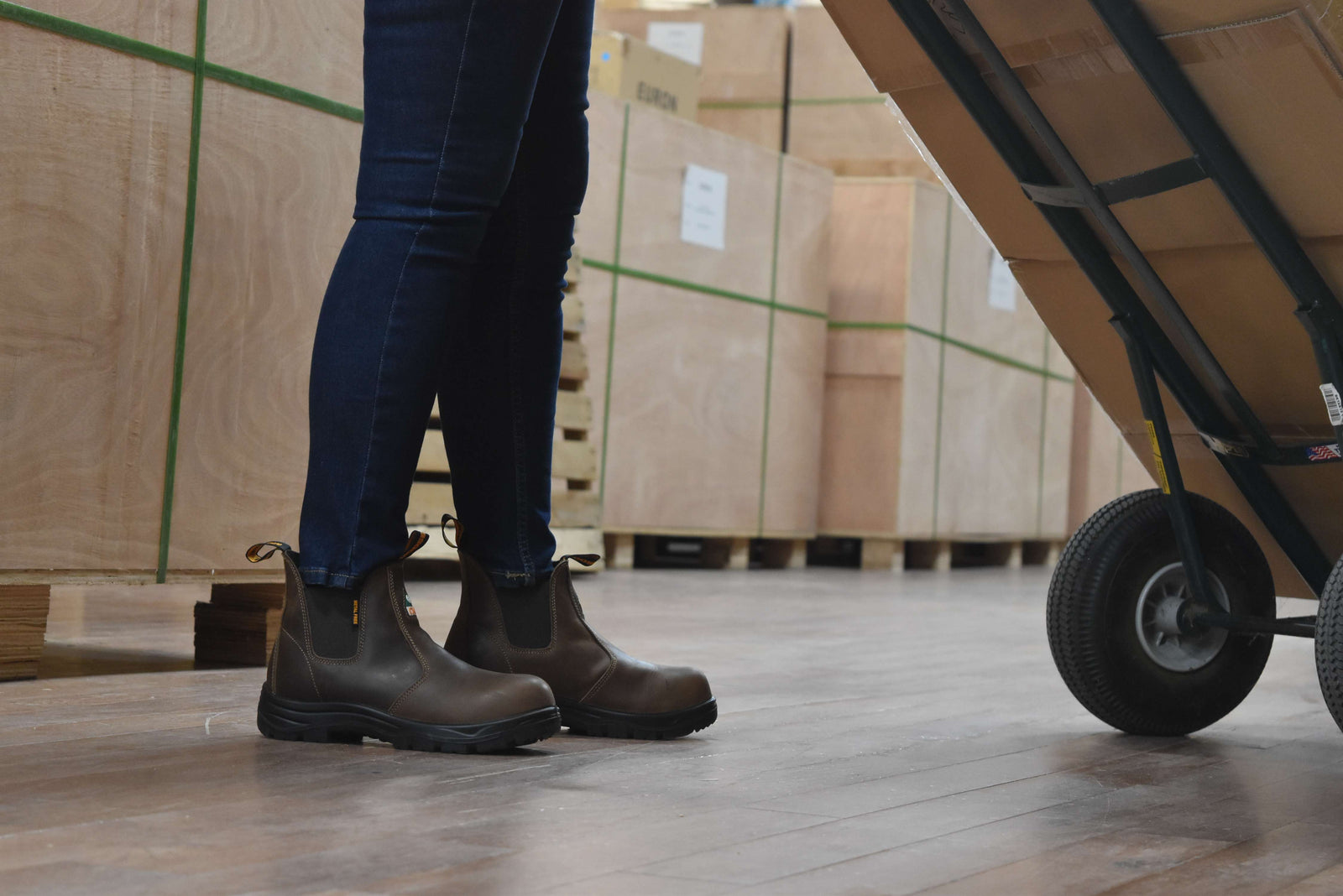
Warehousing & Logistics
Light composite toe. Slip resistance for polished concrete. Supportive footbed for long standing. Stable midfoot for repetitive steps. Breathable upper.

Landscaping & Groundskeeping
Green triangle. Composite toe. Deep-lug traction for grass and soil. Water-resistant leather. Durable upper for tool abrasion.

Utilities & Maintenance
Composite toe. Puncture protection. Electrical hazard rating. Aggressive traction for ladders and metal platforms. Secure ankle support.

Transportation & Delivery
Light composite toe. Flexible outsole. Slip resistance for sidewalks and entrances. Breathable build. Soft cushioning for daily mileage.

Myth 1: Composite toes are weaker than steel
Composite toe caps pass the same impact and compression tests as steel. CSA and ASTM standards require equal performance across materials.
Read more
Myth 2: All Canadian jobsites require CSA
Many Canadian workplaces use CSA rules, but each site sets its own safety requirements, so safety shoe standards can differ widely.
Read more
Myth 3: Heavier boots provide more protection
Safety standards measure protection, not weight. Toe caps, plates, and outsoles pass tests regardless of mass.
Read more
Sección de preguntas frecuentes
Preguntas frecuentes
¿Las botas de trabajo MooseLog están aprobadas por la CSA?
Sí, todas las botas de trabajo MooseLog cumplen con los estándares CSA Z195-14, lo que garantiza la protección contra riesgos de impacto, compresión y perforación en los lugares de trabajo canadienses.
Obtenga más información sobreGrupo CSA
¿Son las botas de seguridad MooseLog adecuadas para turnos de trabajo largos?
Sí, nuestras botas están diseñadas con materiales livianos y entresuelas acolchadas para brindar comodidad durante todo el día y reducir la fatiga del pie.
¿Las normas de seguridad canadienses exigen el uso de botas de trabajo?
Sí, en muchas industrias como la construcción, la fabricación y el almacenamiento, se requieren botas de trabajo aprobadas por CSA para cumplir con los estándares de seguridad ocupacional en Canadá.
¿Cuál es la diferencia entre las botas de seguridad y las botas de trabajo normales?
Las botas de seguridad son un tipo de bota de trabajo que incluye características como puntera de acero o de material compuesto, suelas resistentes a perforaciones y protección contra riesgos eléctricos, mientras que las botas de trabajo normales pueden no ofrecer protección certificada.
¿Cómo elijo las botas de trabajo adecuadas para mi trabajo?
Elegir las botas de trabajo adecuadas depende de su entorno laboral. Busque características como la certificación CSA o ASTM, resistencia al deslizamiento, impermeabilidad, aislamiento o materiales sin metal para trabajos en aeropuertos o eléctricos.
¿Pueden las botas de trabajo ser a la vez protectoras y ligeras?
Sí, las botas de trabajo modernas ofrecen protección completa y, al mismo tiempo, son ligeras. La puntera de composite y los diseños sin metal de MooseLog reducen el peso sin comprometer la seguridad.
Manténgase protegido y cómodo con el calzado de seguridad aprobado por la CSA en Prince Albert. Fabricado según las normas de seguridad canadienses de la CSA, este calzado está diseñado para quienes trabajan en entornos de alto riesgo como obras de construcción, almacenes e instalaciones industriales. Con punteras reforzadas, suelas antideslizantes y materiales resistentes a las perforaciones, nuestro calzado de seguridad aprobado por la CSA ofrece una protección excepcional contra los riesgos laborales más comunes. Diseñado para la comodidad, incluye plantillas acolchadas para un uso prolongado y una larga duración. Disponible en una variedad de estilos para hombre y mujer, este calzado ofrece el equilibrio perfecto entre seguridad, comodidad y rendimiento. Elija el calzado de seguridad aprobado por la CSA en Prince Albert para garantizar la protección de sus pies mientras trabaja con confianza y comodidad.
Explora nuestra colección de botas de trabajo con certificación CSA y ASTM para una protección con estilo. Soporte en español disponible por chat y envío rápido a EE. UU. y Canadá.
