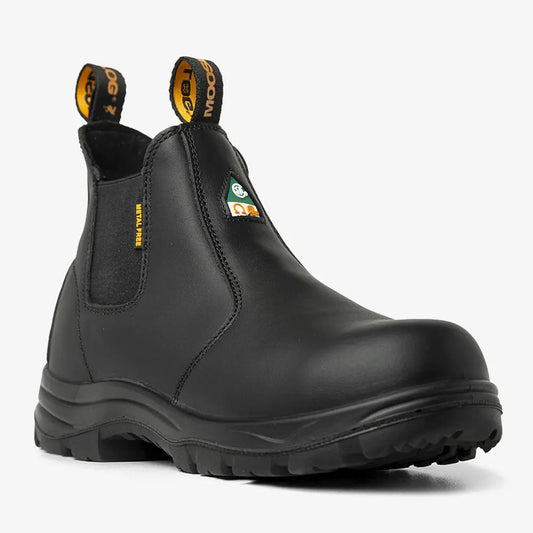
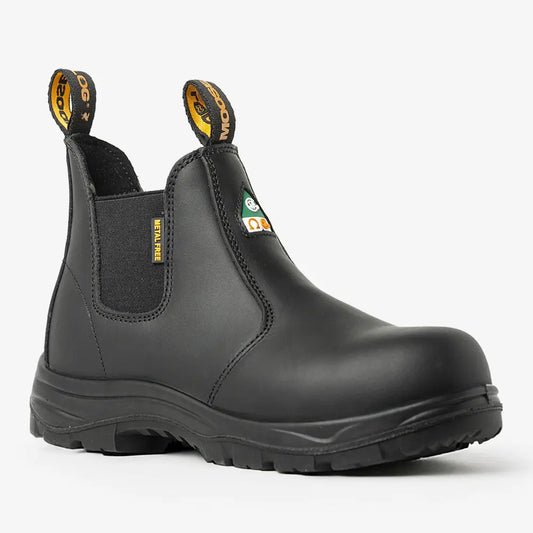
Weight
Heavier construction provides maximum durability and protection in extreme conditions
Lightweight materials reduce fatigue during long shifts while maintaining safety standards
¿Tienes una cuenta?
Inicia sesión para finalizar tus compras con mayor rapidez.
Composite toe safety boots are work boots fitted with a non-metal protective toe made from materials such as fibreglass, carbon fibre, or plastics. They are designed to protect against impact and compression while remaining lightweight and metal-free.
Steel toe safety boots are work boots fitted with a hardened steel cap over the toes. They are designed to protect against impact and compression hazards and meet recognized safety standards for workplace protection.
Heavier construction provides maximum durability and protection in extreme conditions
Lightweight materials reduce fatigue during long shifts while maintaining safety standards
Will trigger metal detectors at security checkpoints and sensitive work environments
Non-metallic construction passes through metal detectors without issue
Conducts heat and cold, which can be uncomfortable in extreme weather conditions
Insulates against temperature extremes, keeping feet comfortable in any climate
Conducts electricity and requires additional insulation for electrical hazard protection
Non-conductive materials provide natural electrical hazard resistance
Fully CSA Approved and ASTM Compliant
Alloy toe safety boots use lightweight metal blends like aluminum or titanium instead of steel. They offer the same impact and compression protection as steel toe boots but weigh less and feel less bulky. Alloy toes can still conduct temperature and electricity, and they may trigger metal detectors, but they reduce overall boot weight compared to traditional steel.
Carbon toe safety boots use carbon fibre or carbon composite materials rather than metal. They meet impact and compression requirements while staying lightweight and non-conductive. In performance, carbon toes are closer to composite toes than steel, offering reduced weight, no metal detector issues, and better insulation from heat and cold.
Composite toe construction reduces weight and eliminates metal, but it does not define how a safety boot performs on its own. Toe material is only one part of the overall system.
A lighter toe does not automatically prevent fatigue. Comfort and long shift performance still depend on total boot weight, internal structure, flex points, and how the boot moves during repeated steps. Poor balance or rigid construction elsewhere can outweigh the benefits of a composite toe.
Composite toe also does not replace other critical protections. Underfoot puncture resistance, outsole traction, electrical hazard protection, and overall stability must be designed into the boot as a whole. Choosing composite is about reducing unnecessary weight, not treating toe material as a complete solution.
guaranteed
All MooseLog safety boots use a composite toe with a wider toe box to reduce pressure and pinching.
Insoles and midsoles use high-rebound materials (PU) to absorb impact and return energy during repeated steps.
Air mesh lining improves airflow to manage heat and moisture.
Maximally
Composite toe and composite puncture-resistant plates replace traditional metal components.
At approximately 0.49 kg per boot, MooseLog safety boots are consistently lighter than comparable safety footwear.
Dual Certified
MooseLog safety boots surpass CSA Z195 and ASTM F2413 certification requirements.
Dual certification allows use across all regulated Canadian and United States jobsites.
Premium Quality
We use Full-grain crazy horse leather that ages the right way. Instead of cracking or thinning, it breaks in gradually and moulds to your foot.
Leather thickness approximately 2mm.
In-depth guide breaks down every layer inside a CSA and ASTM certified safety boot.
Read more
How Do they Compare? Are Lace-Ups actually more supportive? When to choose Slip-On?
Read more
Learn how CSA and ASTM PR-rated plates work, the difference between steel and composite options.
Read moreAn alternative to the traditional steel toe boot, composite toe boots use non-metal materials such as fibreglass, carbon fibre, or Kevlar to protect the toes from impact and compression. They meet the same safety standards while remaining lighter, non-conductive, and temperature neutral, making them suitable for electrical work or cold environments.
Yes. Composite toe boots reduce fatigue because they’re lighter than steel and non-conductive to heat or cold.
Weight reduction lowers strain on the legs, knees, and lower back during long shifts. When paired with a supportive insole and shock-absorbing midsole, they provide consistent comfort for workers who stand or walk for extended hours.
Sí, las botas con puntera compuesta de MooseLog están completamente libres de metal, lo que las hace ideales para entornos con estrictos controles de seguridad.
Las botas con punta de acero tienen una tapa de metal para protección, mientras que las botas con punta compuesta no tienen metal, son un 30 % más livianas y no activan los detectores de metales.