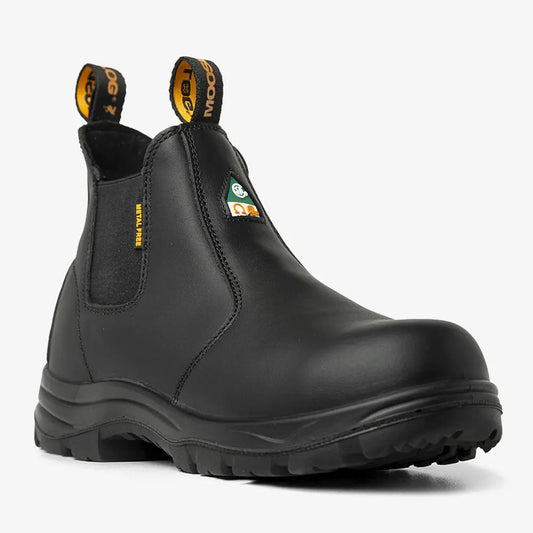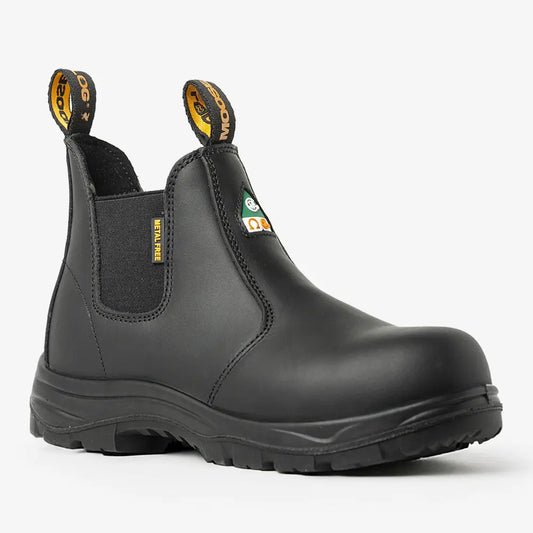


Placas resistentes a perforaciones en botas de trabajo: con o sin ellas
Tus botas te protegen de los peligros que te rodean. La mayoría de los trabajadores se centran en la puntera, ya que es la parte más visible de una bota de seguridad, pero lo que se encuentra debajo del pie es igual de importante. Una placa antiperforación (PR) protege la planta del pie de los residuos afilados que se esconden en la tierra, el hormigón, la grava, los montones de chatarra y los residuos de obras de reforma. Los trabajadores que pasan el día rodeados de clavos, varillas de refuerzo, retales de metal o material roto dependen de esta capa para evitar lesiones que les impidan trabajar.
¿Qué es una placa resistente a la perforación?
Una placa antiperforación es una barrera firme integrada en la bota, debajo de la plantilla. Se ubica entre la suela y la plantilla, cubriendo toda la zona del pie. Su única función es impedir que objetos afilados atraviesen la suela de la bota.
Para ser considerada resistente a la perforación, la placa debe pasar pruebas estrictas bajo estándares de seguridad:
- CSA Z195 (Canadá)
- ASTM F2413 (EE. UU.)
La prueba utiliza una fuerza de hasta 1200 N (aproximadamente 270 libras) sobre una sonda de prueba puntiaguda. La placa debe detener la sonda por completo sin que se produzcan roturas. Las botas que superan la prueba llevan la marca "PR" en la etiqueta.
Placas de acero vs. placas compuestas
Placa de acero
- Muy fuerte y duradero.
- Más pesado y menos flexible
- Transfiere calor y frío.
- Activa los detectores de metales
- Común en botas de seguridad antiguas o económicas.
Placa compuesta
- Fabricado con Kevlar®, fibra de aramida o plásticos de ingeniería.
- Más ligero y flexible
- No conduce calor ni electricidad.
- Funciona bien en roles de ritmo rápido o zonas libres de metales.
- Se encuentra en muchas botas modernas debido a sus beneficios de comodidad y peso.
Ambos tipos de placas deben cumplir con los mismos resultados de las pruebas CSA y ASTM. La diferencia radica en la sensación y el peso, no en el nivel de protección.
Por qué son importantes las placas de relaciones públicas en el trabajo
Protección bajo los pies
Escombros de construcción, desechos de demolición, clavos de palets, baldosas rotas y herramientas de jardinería afiladas permanecen bajo los pies todo el día. Una placa de protección contra incendios bloquea estos peligros antes de que lleguen a los pies.
Cumplimiento de CSA y ASTM
Muchos lugares de trabajo exigen botas con clasificación PR como parte del EPI obligatorio. Si no se cuenta con la clasificación PR, se puede denegar la entrada o ser enviado a casa.
Conjunto de protección completo
Las botas con placas PR suelen incorporar características de protección contra impactos, compresión y riesgo eléctrico. Los trabajadores que se mueven en entornos impredecibles dependen de este conjunto completo de protecciones.
¿Qué sucede sin protección de relaciones públicas?
Las suelas de goma por sí solas no pueden detener clavos ni tornillos. Sin una placa, el riesgo de lesiones por punción aumenta en cualquier obra que manipule materiales de construcción, palés, chatarra o terreno irregular. Los trabajadores pueden sentirse seguros con una puntera resistente, pero la planta del pie queda expuesta si la bota no tiene clasificación PR.
Algunos puestos de trabajo también exigen auditorías de EPI. Si una bota no muestra la marca PR, es posible que se le pida que abandone el lugar de trabajo hasta que tenga calzado certificado.
Cómo comprobar la protección de relaciones públicas
Mire directamente la etiqueta de la lengüeta, la etiqueta interior o el estampado de la suela. Debería ver:
- CSA: “PR” junto a “I” (impacto), “C” (compresión) y “EH” (riesgo eléctrico)
- ASTM: “F2413-18 MI/75 C/75 PR EH”
Si falta la indicación “PR”, la bota no tiene placa antiperforación, incluso si la puntera está certificada.
¿Quién necesita más placas de relaciones públicas?
| Industria | ¿Necesita placa PR? | Razón |
|---|---|---|
| Construcción | Sí | Clavos, varillas de refuerzo y escombros por todas partes |
| Demolición | Sí | Alta exposición a desechos punzantes |
| Almacenamiento | A veces | Clavos para palets, astillas |
| Electricidad/Servicios Públicos | A menudo | A menudo se requieren PR + EH |
| Paisajismo | Recomendado | Picos, herramientas, vidrio |
| Trabajo ligero/administrativo | No | Riesgo mínimo |
Los trabajadores que se desplazan entre múltiples sitios o manejan condiciones de suelo desconocidas son los que más se benefician de la protección de relaciones públicas.
Placas de confort y relaciones públicas
Las placas de acero antiguas añadían peso y rigidez, pero las placas de composite modernas se doblan con el pie y reducen la fatiga. La mayoría de los trabajadores no sienten la placa una vez que la bota se ha adaptado. Una talla adecuada y una plantilla con buen soporte influyen en la comodidad mucho más que la placa en sí.
A qué se reduce esto
Si el terreno en el que trabaja puede ocultar un peligro punzante, una bota con clasificación PR es una protección práctica para sus pies. Tanto las placas de acero como las de materiales compuestos cumplen con los mismos estándares de seguridad. Lo importante es la certificación, la durabilidad y la preparación para el trabajo que realiza. Para más información sobre cómo elegir el calzado de seguridad adecuado para todo tipo de trabajo, lea nuestro... Guía completa de compra de botas de trabajo .