


Browse CSA Approved Safety Shoes
-
Example product title
Regular price $19.99 USDRegular price Sale price $19.99 USDUnit price per -
Example product title
Regular price $19.99 USDRegular price Sale price $19.99 USDUnit price per -
Example product title
Regular price $19.99 USDRegular price Sale price $19.99 USDUnit price per -
Example product title
Regular price $19.99 USDRegular price Sale price $19.99 USDUnit price per
Women's bestsellers are coming soon.
Table of Contents
1. What Does CSA Approved Mean?
CSA approved means the footwear meets the safety tests defined in the CSA Z195 standard. These tests confirm impact protection, puncture resistance, and electrical hazard defence when the boot carries the matching mark. The approval tells you the boot passed laboratory testing and earned a verified safety rating.
You can explore a deeper breakdown of in our CSA approved safety shoes guide.
Each rating appears as a specific CSA symbol, and these symbols help you understand exactly what level of protection you get.

2. Is CSA Approval Required In Canada?
In Canada, CSA-approved boots are legally required for any worker exposed to foot hazards like falling objects, punctures, or electrical shocks. These requirements are set by provincial and federal Occupational Health and Safety (OHS) laws, which mandate that protective footwear must meet the CSA Z195 standard.
While the law requires you to wear them, it generally views boots as personal apparel, meaning you are usually responsible for buying your own unless your employer has a specific agreement to pay for them. Failing to wear certified boots can lead to you being removed from a job site or having an insurance claim denied if an injury occurs.


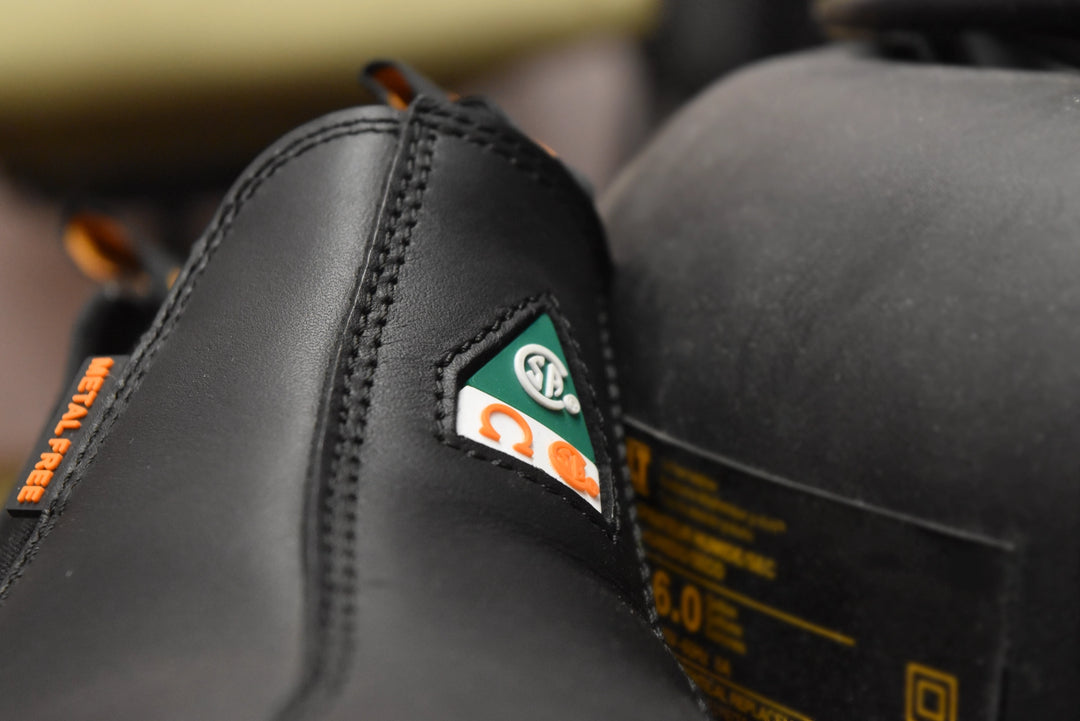
Green Triangle
The green triangle marks safety footwear with a Grade 1 protective toe cap and a puncture-resistant sole. It meets the highest CSA Z195 impact rating and includes a plate that helps stop sharp objects from entering through the bottom of the boot. Jobs with heavy materials, sharp debris, or active warehouse movement rely on this symbol.

White Rectangle & Orange Omega
The white rectangle with the orange Omega symbol identifies footwear with electrical shock resistance. It passes CSA testing up to 18,000 volts and contains no exposed metal parts. Workers who handle electrical equipment or work near live circuits depend on this mark for added protection.

SD
The SD symbol appears on footwear that reduces static build-up on the body and moves low-level charges safely into the ground. It helps lower the risk of static discharge in workplaces that handle electronics, chemicals, or sensitive components.

SD+
The SD+ symbol indicates an upgraded level of static control. It removes static charges faster and manages a wider range of surface conditions. Facilities with strict static requirements often use SD+ footwear for added protection around electronic systems and precision equipment.

Metatarsal Protection
The metatarsal symbol marks footwear with built-in protection over the upper foot. It shields the metatarsal bones against falling objects during lifting, loading, or heavy material movement. The protection guard must pass a 75ft-lb (101.7 J) impact test. Workers in industrial settings rely on this feature for extra impact control.
The video above shows how CSA Group evaluates safety footwear under controlled laboratory conditions. Each test focuses on a different protection zone of the boot. The protection zones tested are outlined below.
Toe Protection (Impact and Compression)
The toe cap must protect against falling and rolling objects without collapsing into the foot.
- A weighted striker is dropped onto the toe to simulate impact
- Internal clearance is measured after the strike
- Compression force is applied to confirm crush resistance
Puncture Resistance
The puncture plate protects the bottom of the foot from sharp ground hazards.
- A hardened steel probe is driven upward through the sole
- The force required to penetrate is measured
- The plate must stop the probe before it reaches the foot zone
Electrical Hazard Protection
Electrical testing checks how well the boot limits current flow.
- Voltage is applied to the boot
- Leakage current through the sole is measured
- Results must stay within CSA safety limits
Static Control
Some boots are designed to manage static rather than fully insulate.
- Static charge is applied to the boot
- Resistance and discharge time are measured
- Performance must fall within CSA-defined ranges
Metatarsal Protection
Metatarsal guards protect the top of the foot from impact.
- A top-strike impact is applied over the metatarsal area
- Force spread and deformation are measured
- The guard must prevent contact with the foot
Regular care keeps safety shoes performing the way they were designed. Start by brushing off dust and workplace debris at the end of each shift, since buildup can shorten the life of the upper and outsole. Wipe the leather or synthetic material with a damp cloth and let the footwear dry at room temperature so the structure does not weaken from heat.
Remove the insoles once in a while to air them out and slow odour buildup. Check the tread for worn areas and look for cuts in the outsole, since damaged traction reduces stability on concrete, steel, and wet surfaces. Clean the toe cap area as well, because dirt trapped around the forefoot can stiffen the upper over time. Consistent maintenance keeps the shoe stable, comfortable, and reliable through daily use.

Full Grain Waterproof Leather Upper
Resists moisture, softens over time, and moulds naturally to your foot shape.
Anti-Fatigue High Rebound Insole
Layered PU cushioning that absorbs impact and returns energy to reduce strain.
Fiberglass Composite Toe Cap
Layered reinforced fibres to provide CSA approved impact protection with minimal weight.
SafeTread Rubber Outsole
Slip resistant, oil resistant, and heat resistant up to 300°C (572°F)
Dyna-Flex Composite Plate
Anti-puncture lightweight and flexible plate that stops sharp objects from entering through.
Full Grain Waterproof Leather Upper
Resists moisture, softens over time, and moulds naturally to your foot shape.
Anti-Fatigue High Rebound Insole
Layered PU cushioning that absorbs impact and returns energy to reduce strain.
Fiberglass Composite Toe Cap
Layered reinforced fibres to provide CSA approved impact protection with minimal weight.
SafeTread Rubber Outsole
Slip resistant, oil resistant, and heat resistant up to 300°C (572°F)
Dyna-Flex Composite Plate
Anti-puncture lightweight and flexible plate that stops sharp objects from entering through.

Construction & Trades
CSA certifiation. Composite toe. Puncture protection. Slip resistant outsole. Heat resistant outsole. Stable ankle support.
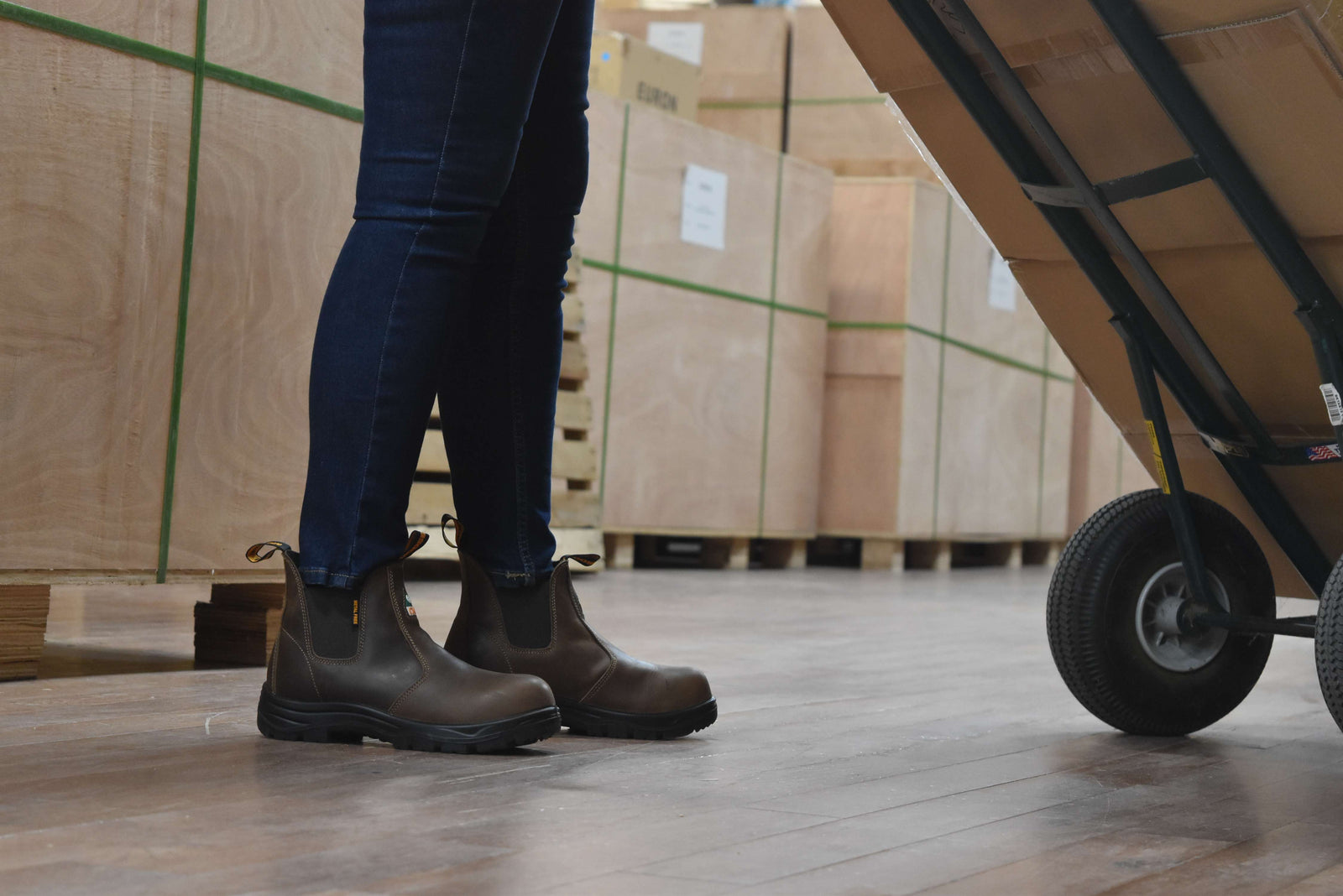
Warehousing & Logistics
CSA certification. Composite toe. Slip resistant outsole. Supportive footbed. Stable midfoot. Breathable upper.

Landscaping & Groundskeeping
CSA certification. Composite toe. Deep tread slip resistant outsole. Water resistant leather. Durable upper.

Utilities & Maintenance
CSA certification. Composite toe. Puncture protection. Aggressive traction pattern. EH / ESR rating. Stable ankle structure.

Transportation & Delivery
CSA certification. Lightweight composite toe. Flexible outsole. Slip resistant tread. Breathable materials. Soft cushioning.

Myth 1: Composite toes are weaker than steel
Composite toe caps pass the same impact and compression tests as steel. CSA and ASTM standards require equal performance across materials.
Read more
Myth 2: All Canadian jobsites require CSA
Many Canadian workplaces use CSA rules, but each site sets its own safety requirements, so safety shoe standards can differ widely.
Read more
Myth 3: Heavier boots provide more protection
Safety standards measure protection, not weight. Toe caps, plates, and outsoles pass tests regardless of mass.
Read more
Collapsible content
What are CSA approved safety shoes?
CSA approved safety shoes are footwear that pass the safety tests in the CSA Z195 standard. The approval confirms the shoe meets rated protection for impact, puncture resistance, electrical hazards, or static control depending on the symbol on the label.
What does CSA mean in shoes?
CSA refers to the Canadian Standards Association. When used on footwear, it means the shoe was tested to CSA Z195 and meets the safety requirements shown by its symbol, such as toe protection, puncture resistance, or electrical hazard protection.
What does “CSA approved” mean?
“CSA approved” means a boot passed laboratory testing under the CSA Z195 standard and earned an official mark that confirms its level of protection. Each symbol shows what the shoe is certified to handle on the jobsite.
What is a CSA approved footwear bearing a green triangle?
A green triangle marks footwear with a Grade 1 protective toe cap and a puncture-resistant sole. It is the highest CSA Z195 impact rating and is used in jobs with heavy materials, sharp debris, or active warehouse movement.
Are composite toe boots good for standing all day?
Yes. Composite toe boots reduce fatigue because they’re lighter than steel and non-conductive to heat or cold.
Weight reduction lowers strain on the legs, knees, and lower back during long shifts. When paired with a supportive insole and shock-absorbing midsole, they provide consistent comfort for workers who stand or walk for extended hours.
Are your composite toe boots metal detector friendly?
Yes, MooseLog’s composite toe boots are completely metal-free, making them ideal for environments with strict security checks.
Are MooseLog work boots CSA approved?
Yes, all MooseLog work boots meet CSA Z195-14 standards, ensuring protection against impact, compression, and puncture hazards in Canadian workplaces.
Learn more about CSA Group
Do MooseLog boots comply with ASTM safety standards?
Yes, our work boots meet ASTM F2413-24 standards for impact resistance, compression, and electrical hazard protection in U.S. job sites.
Learn more about ASTM International
CSA approved safety shoes rely on clear symbols, verified testing, and safety ratings that match real jobsite conditions. When you understand how CSA Z195 works, you know exactly what level of impact protection, puncture resistance, electrical hazard defence, or static control you’re getting from your footwear. This helps you choose shoes that match your work environment with confidence and avoid guessing what each mark means. The guides below help you explore specific features, protection levels, and jobsite needs in more detail.
If you’re looking for CSA and ASTM certified footwear that keeps weight down and protection high, you can browse MooseLog safety shoes. Each pair is built with metal free components, composite toe protection, and puncture resistant plates tested to meet Canadian and North American standards. Explore the collection and choose a pair that fits your jobsite.
Further Reading
Explore CSA & ASTM certified work boots built for comfort, safety, and style. Fast delivery and trusted support across North America.
