

What Work Boots You Need for Construction, Warehousing, HVAC and more
Work boots support your footing, protect your toes and help your body handle long days on a job site. Each industry places different demands on footwear. Surfaces, climate, equipment and daily movement patterns shape the type of boot you need. Work boots that match these conditions improve comfort and reduce injury risk. This guide explains how job type influences the features that matter most when choosing reliable work boots.
Canadian workplace injury data shows that strains, slips and contact with objects remain leading causes of time-loss claims. Proper footwear helps control many of these risks by improving traction, supporting posture and protecting the foot from heavy loads or sharp surfaces.
Construction and Skilled Trades
Construction jobs expose you to shifting surfaces, raised platforms, unfinished structures and high traffic areas. You step on concrete edges, rebar, lumber and gravel. Your tasks change throughout the day which places varied stress on your feet and ankles.
Key footwear requirements
- Strong toe protection for impact
- Puncture resistant midsole for job site debris
- Deep traction for loose dirt and uneven surfaces
- Heat resistant outsole for rooftop work and exposed concrete
- Supportive ankle structure for ladders and elevated platforms
Workplace insight
BuildForce Canada reports that construction employment reached more than 1.6 million workers in 2024. The industry continues to operate with labour markets that remain tight by historical standards. Activity is strong across many provinces due to steady investment in non-residential buildings and infrastructure. This level of activity places constant physical demands on crews who move across unfinished surfaces and handle materials throughout the day. Work boots that support balance, grip and foot protection help manage these daily pressures on busy job sites.
Warehousing and Distribution
Warehousing involves long walking distances, manual handling and quick small-space turns. Smooth concrete increases foot pressure and exposes weaknesses in cushioning or outsole material.
Key footwear requirements
- Lightweight design to reduce daily fatigue
- Slip resistant pattern for polished concrete
- Cushioned midsole for repetitive walking
- Breathable upper for warm interiors
- Stable heel structure for pallet work and equipment zones
Workplace insight
Industry research from IBISWorld shows that Canada’s warehousing and storage sector grew at a compound annual rate of 3.3 percent over the past five years and reached an estimated 2.3 billion dollars in revenue in 2024. Growth in e-commerce and steady performance in manufacturing, wholesale and retail increased the physical workload inside warehouses. Higher product volume and more frequent handling raised the number of steps, lifts and transitions workers perform each day. Work boots with strong cushioning, slip resistance and stable support help manage these demands on smooth concrete floors.
Outdoor Labour and Grounds Work
Outdoor work covers parks, farms, roadwork and general maintenance. Surfaces include slopes, soft ground, wet soil and uneven terrain. Weather changes create different traction demands through the day.
Key footwear requirements
- Protective toe cap
- Aggressive tread for mud, grass and loose gravel
- Water resistant leather
- Durable upper for tool contact and abrasions
- Firm heel support for hillside stability
Workplace insight
Labour data shows that about 73 percent of landscaping and grounds maintenance labourers work only part of the year, compared to 37 percent across all occupations. This level of seasonality changes the surfaces and weather conditions workers face. Summer tasks involve uneven ground, slopes and loose debris which require supportive leather boots that stabilize the ankle. Winter work demands insulated, waterproof boots with deep traction to manage snow, ice and cold exposure. Seasonal shifts create a wide range of footing challenges, making reliable traction and strong upper materials essential for steady movement throughout the year.
Recommended Work Boot

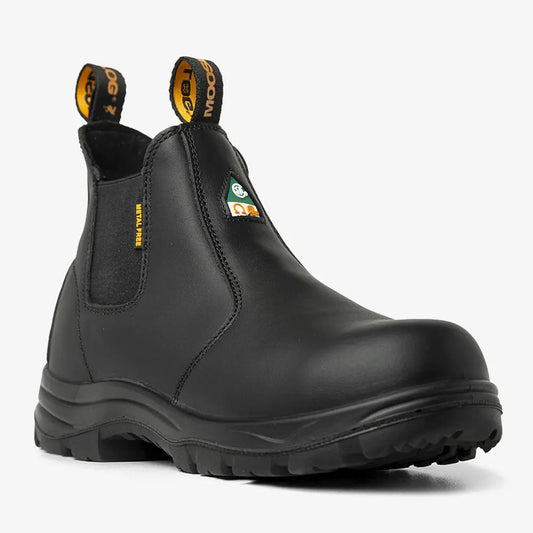
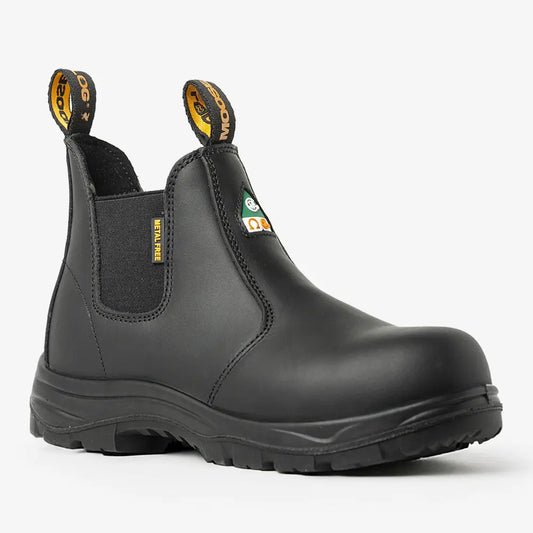
The MooseLog Timber composite toe boot supports outdoor labour across parks, farms, roadwork and general maintenance. It meets CSA and ASTM requirements and uses a composite toe, a Dyna-Flex® puncture-resistant plate and a durable leather upper. The anti-slip rubber outsole provides traction on grass, soil and loose gravel. The boot holds structure during hillside work, repetitive bending and tool contact. It performs well during seasonal changes that bring wet ground, uneven surfaces and variable temperatures.
Manufacturing and Industrial Production
Manufacturing jobs vary from light assembly to heavy fabrication. You may work around machinery, metal surfaces, lubricants or chemical residues. Some areas require electrical isolation while others focus on slip control.
Key footwear requirements
- Certified toe protection
- Outsole compounds that resist oil and chemicals
- Abrasion resistant leather
- Reliable arch support for fixed workstations
- Electrical hazard rating when equipment requires it
Workplace insight
Provincial safety boards, such as WorkSafeBC, confirm that the Canadian manufacturing sector is a high-risk environment, with a serious injury rate 44% higher than the average across all industries. To combat the most frequent accidents which includes being struck by objects, falls on the same level, and getting caught in machinery, work boots must be mandatory PPE. Specifically, they must feature a certified impact-resistant toe cap, an abrasion-resistant upper, and robust slip-resistant outsoles to stabilize workers on contaminated floors and protect against heavy material handling.
Utilities, Power and Building Services
Utility workers manage inspections, repairs and system checks across varied environments. Surfaces include metal walkways, mechanical rooms, damp basements and outdoor pads. Work often involves climbing, kneeling and operating tools in confined areas.
Key footwear requirements
- Toe protection for confined spaces
- Electrical hazard protection
- Traction pattern suited to wet metal and equipment surfaces
- Puncture resistance for older structures and debris
- Secure ankle structure
Workplace insight
A report from Electricity Canada identifies slips, trips, overexertion and contact with equipment as leading injury sources in the electricity sector. These findings show the physical demands placed on utility workers who move through mechanical rooms, outdoor pads and energized areas. Work boots that support footing, provide traction and maintain structure help reduce these risks during inspections, repairs and routine system work.
Mobile Service and On-Site Support
Technicians, inspectors and field service staff travel through residential, commercial and outdoor settings. You move between stairways, vehicles, walkways, loading areas and mechanical rooms.
Key footwear requirements
- Lightweight toe protection
- Flexible outsole for quick steps
- Strong traction for mixed surfaces
- Breathable materials for indoor visits
- Cushioning that supports constant stops and starts
Workplace insight
Guidance from the Infrastructure Health and Safety Association highlights the risks that come from constant movement between vehicles and ground surfaces. Their transportation safety article advises drivers to maintain three point contact when stepping in or out of a cab and to wear footwear with strong support and reliable grip. Their winter hazard bulletin also lists ice, snow, slush and wet surfaces as common causes of slips and recommends clearing the soles of boots before stepping down. These findings show how important traction, support and clean tread become for workers who travel through varied environments during the day.
How to Choose Based on Your Job
Your ideal work boot depends on three practical questions.
1. What surfaces do you walk on every day?
Surfaces influence traction.
- Concrete needs a pattern that maintains grip on smooth flooring
- Soil, grass and gravel require deep lugs
- Metal walkways need softer rubber compounds that hold contact
- Construction materials need soles that handle dust and debris buildup
2. How long do you stay on your feet?
Shift length shapes comfort needs.
- Long shifts benefit from lighter materials
- Cushioned insoles help repetitive stepping
- Warm indoor roles require breathable uppers
- Outdoor roles benefit from insulation or water resistance
3. What hazards do your tasks create?
Work activity defines the protection you need.
- Heavy loads require strong toe caps
- Sharp debris requires puncture resistance
- Electrical equipment requires protective ratings
- Slippery areas require high traction outsoles
- Busy sites require a stable heel and supportive build
Conclusion
The work you do determines the footwear that supports you best. Work boots that match your environment help you move with more control, maintain better posture and reduce the chance of strains or slips. A clear understanding of your tasks makes choosing the right boot simpler and helps you stay comfortable through long shifts.
FAQs
Do all work boots fit every job?
No. Each job has its own surface conditions and hazards. Choose a pair that fits your daily tasks.
Are composite toes common in work settings?
Yes. Many workers choose composite toes for strong protection with lower weight.
What footwear works best for outdoor labour?
Boots with deep traction, protective toes and water resistant leather work well outdoors.
What outsole works well for smooth warehouse floors?
Slip resistant rubber designed for polished surfaces helps maintain traction.
Can one pair work for both indoor and outdoor routes?
Yes. Many designs balance traction, support and breathability for mixed use.
How long do work boots usually last?
Most workers replace their boots every six to twelve months depending on workload, surface type and abrasion.