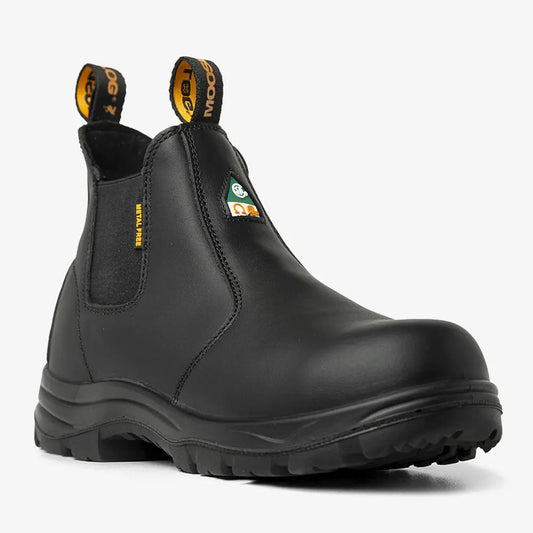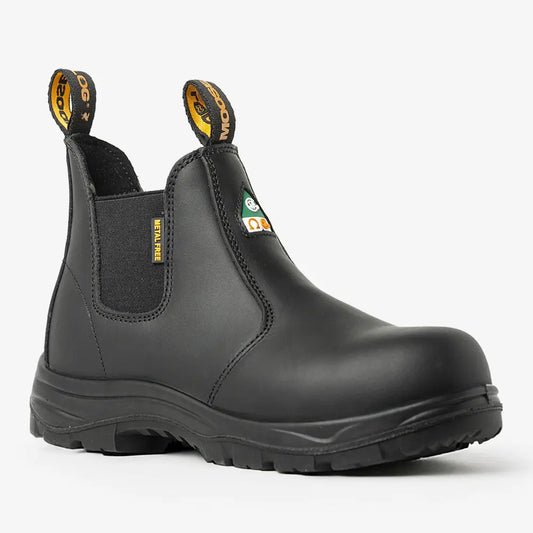


Stop Doing These 7 Mistakes That Destroy Your Work Boots
Work boots deal with long days, heavy loads and rough ground. Most pairs fail early because of small habits that people never think about. These habits build up over time. They bend materials the wrong way, crush the wrong spots or let dirt sit where it should not.
Here are 7 habits that shorten the life of any boot, and these habits often go against basic maintenance guidelines from the Canadian Centre for Occupational Health and Safety.
Mistake 1: Dragging your toe when you kneel
Most workers do this during every task that involves ground work. The front edge scrapes concrete, plywood, gravel and steel. This breaks stitching, thins the leather and cuts into the toe area. The damage grows fast because the motion repeats every day.
Mistake 2: Standing on rebar or ladder rungs
Rebar and ladder rungs create a sharp pressure point under the boot. All your body weight sits on a narrow line. This crushes midsoles, weakens support layers and leaves a permanent dent. The boot loses structure and feels softer in the wrong place.
Mistake 3: Using your boot as a hammer or pry bar
Workers kick boards, tap nails and wedge materials open with the heel or side of the boot. It works in the moment. It also breaks adhesives, loosens the outsole and weakens the back of the boot. Repeated hits make heels collapse early.
Mistake 4: Drying boots in direct heat
Placing boots near heaters, vents, torches or dryers cooks the material. Leather hardens and cracks. Padding shrinks. The inside of the boot loses shape. Even one night of direct heat creates stiffness that never softens again.
Mistake 5: Driving long hours in your work boots
Long driving days bend the boot in one direction over and over. The gas and brake motion crushes the same point on the forefoot. This creates a soft spot and the boot loses its original shape. The bend grows deeper with every trip.
Mistake 6: Leaving your laces loose all shift
Loose laces make the boot bend in unnatural places. The foot moves more than it should. Eyelets stretch. Tongues twist out of position. The heel counter loses support. The boot wears out faster because it flexes in the wrong pattern.
Mistake 7: Stepping in salt, mud or jobsite gunk and leaving it overnight
Salt, concrete dust, oil and mud stay active on the surface long after the shift ends. They dry into the leather and slowly break it down. A quick wipe or rinse at the end of the day prevents most of this damage and keeps the material healthy for longer.
How to make your boots last longer
A few small habits protect your boots and keep them comfortable across the season.
- Wipe them down at the end of the day.
- Let them dry in open air, never near a heater.
- Lace them tight enough to support the ankle.
- Rotate pairs when possible.
- Store them away from weather and direct sun.
These simple steps keep the materials strong and reduce early breakdown.
For a deeper dive, check out the Full Grain Leather Safety Boots Care Guide
Final thoughts
Work boots handle weight, abrasion, sharp surfaces and chemicals. Daily habits decide how long a pair survives. Paying attention to small details saves money, improves comfort and keeps you safer on the job.
Take care of your boots and they stay reliable on every shift. Explore MooseLog CSA and ASTM approved work boots and choose a pair built for long days and tough conditions.